
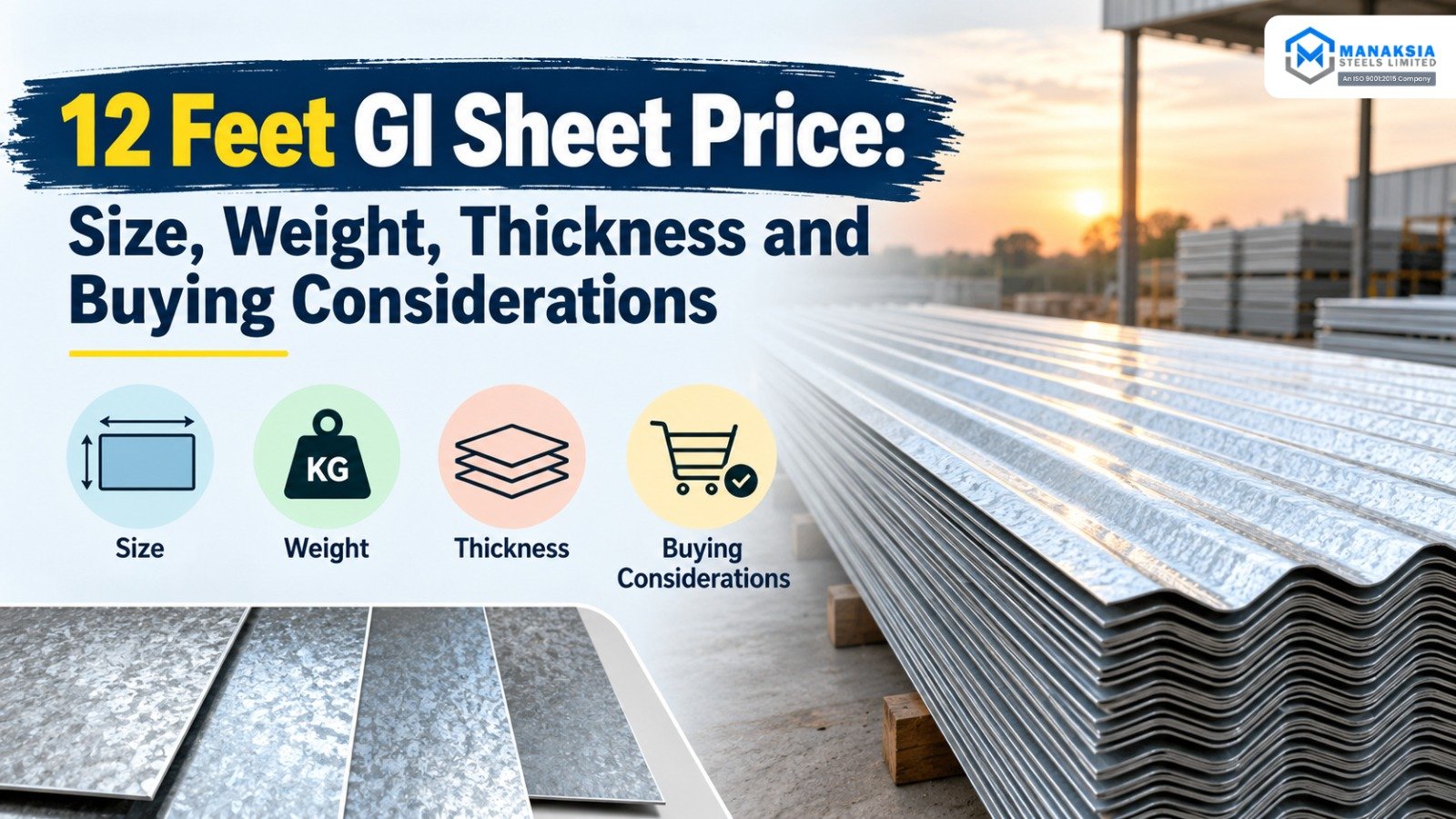
When planning a warehouse, industrial shed, workshop, or commercial building, roofing material is an important investment. Buyers often start with a simple question: what is the 12 feet GI sheet price, and how can they find the right sheet without compromising on quality? The answer depends on more than length alone. Thickness, width, zinc coating, steel quality, sheet profile, and order quantity all influence the final cost. Understanding these factors helps buyers compare quotations accurately and choose roofing materials that meet their project requirements. This guide explains 12 ft GI roofing sheet dimensions, weight calculations, thickness options, pricing factors, and essential checks before purchasing. Whether you are buying for a small shed or a large industrial project, these details can help you make a more informed decision. What Is a 12 Feet GI Sheet? A galvanised iron (GI) sheet is a steel sheet coated with zinc to help protect the underlying steel against corrosion. GI sheets are commonly used for roofing, wall cladding, sheds, warehouses, and other construction applications. A 12 feet GI sheet refers to a sheet approximately 12 feet long, equivalent to 3.66 metres. Its width and thickness may vary depending on the product and intended application. GI sheets are generally available in two common forms: Manaksia Steels Limited offers galvanised steel products in both plain and corrugated forms, with different thicknesses, dimensions, and zinc coating options depending on the specification. 12 Feet GI Sheet Price: What Should You Expect? There is no single fixed price for every 12-foot GI sheet. Two sheets of the same length can have different prices because their widths, thicknesses, coating specifications, and material grades may differ. For an accurate quotation, buyers should confirm the following details: GI sheets may be quoted per kilogram, per sheet, or per unit area. When comparing suppliers, make sure the pricing basis and specifications are consistent. Steel and zinc input costs, transportation charges, taxes, and order volume can also affect the final quotation. Therefore, requesting a current price directly from the manufacturer or supplier is the most reliable way to estimate your purchase cost. 12 Ft GI Roofing Sheet: Size and Thickness Comparison The right GI sheet dimensions depend on your roof design, support spacing, and coverage requirements. A 12-foot sheet may be supplied in different widths. The following examples illustrate how width and thickness affect the material weight. Sheet dimensions Thickness Approx. theoretical steel weight 12 ft × 3 ft 0.40 mm 10.5 kg 12 ft × 3.5 ft 0.40 mm 12.3 kg 12 ft × 4 ft 0.40 mm 14.0 kg 12 ft × 3 ft 0.50 mm 13.1 kg 12 ft × 3.5 ft 0.50 mm 15.3 kg 12 ft × 4 ft 0.50 mm 17.5 kg 12 ft × 3 ft 0.60 mm 15.7 kg 12 ft × 3.5 ft 0.60 mm 18.4 kg 12 ft × 4 ft 0.60 mm 21.0 kg Note: These are approximate theoretical weights calculated using steel density, excluding the additional mass of the zinc coating. Actual weights can vary with coating mass, thickness tolerances, and corrugated profile geometry. Confirm the manufacturer’s specifications before ordering. Manaksia Steels lists galvanised steel thickness options from 0.10 mm to 0.60 mm across different width ranges. Available dimensions depend on the selected thickness and product specification. GI Sheet Weight Chart: How to Calculate the Weight of a 12-Foot Sheet Understanding a GI sheet weight chart is useful when estimating material requirements, transportation costs, and the total purchase value. For a basic theoretical calculation, use the following formula: Weight (kg) = Length (m) × Width (m) × Thickness (mm) × 7.85 Here, 7.85 is the approximate density factor for steel when thickness is expressed in millimetres and dimensions are in metres. Example: Weight of a 12 ft × 3.5 ft GI Sheet Suppose you need a sheet with the following dimensions: The estimated steel weight is: 3.6576 × 1.0668 × 0.50 × 7.85 = approximately 15.3 kg. If you require 100 sheets of the same specification, the estimated base-steel weight would be approximately 1,530 kg, or 1.53 tonnes, before accounting for the zinc coating and manufacturing variations. For corrugated sheets, use the manufacturer’s specified dimensions and weight whenever available. The developed width of the sheet and the effective roof coverage width can differ because of the profile and overlapping edges. How Does Thickness Affect the 12 Feet GI Sheet Price? Thickness is one of the key factors influencing the price of a GI roofing sheet. 0.40 mm GI Sheets Thinner sheets may suit certain light-duty applications, depending on the profile, support spacing, and site conditions. Buyers should confirm that the selected specification meets the structural requirements of the intended installation. 0.50 mm GI Sheets A 0.50 mm sheet can be considered for roofing projects where its material specification and profile meet the design requirements. Its suitability depends on wind loads, support spacing, and the installation method. 0.60 mm GI Sheets A thicker sheet contains more steel per unit area and generally weighs more than a thinner sheet of the same dimensions. It may be appropriate for applications requiring a different level of stiffness, subject to engineering requirements. Important: Thickness alone does not determine roofing performance. Zinc coating, steel grade, sheet profile, fixing arrangement, and structural design also matter. Always confirm the specified thickness in millimetres rather than relying only on gauge numbers. Factors That Affect GI Sheet Pricing Before requesting a quotation, understand the main factors that influence the 12 feet GI sheet price. 1. Thickness and weight: Thicker sheets generally use more steel, increasing material weight and cost. 2. Sheet width and dimensions: Wider sheets require more material. The number of sheets needed also depends on the effective coverage width after overlaps. 3. Zinc coating: The zinc coating specification affects corrosion protection and may influence the price. Manaksia Steels lists galvanised coating options of 80 GSM to 120 GSM, with other requirements available on request. 4. Sheet profile: Plain and corrugated sheets can differ in forming requirements and intended applications. 5.
Colour Coated Roofing Sheets: A Complete Buying Guide for Smarter Construction Decisions
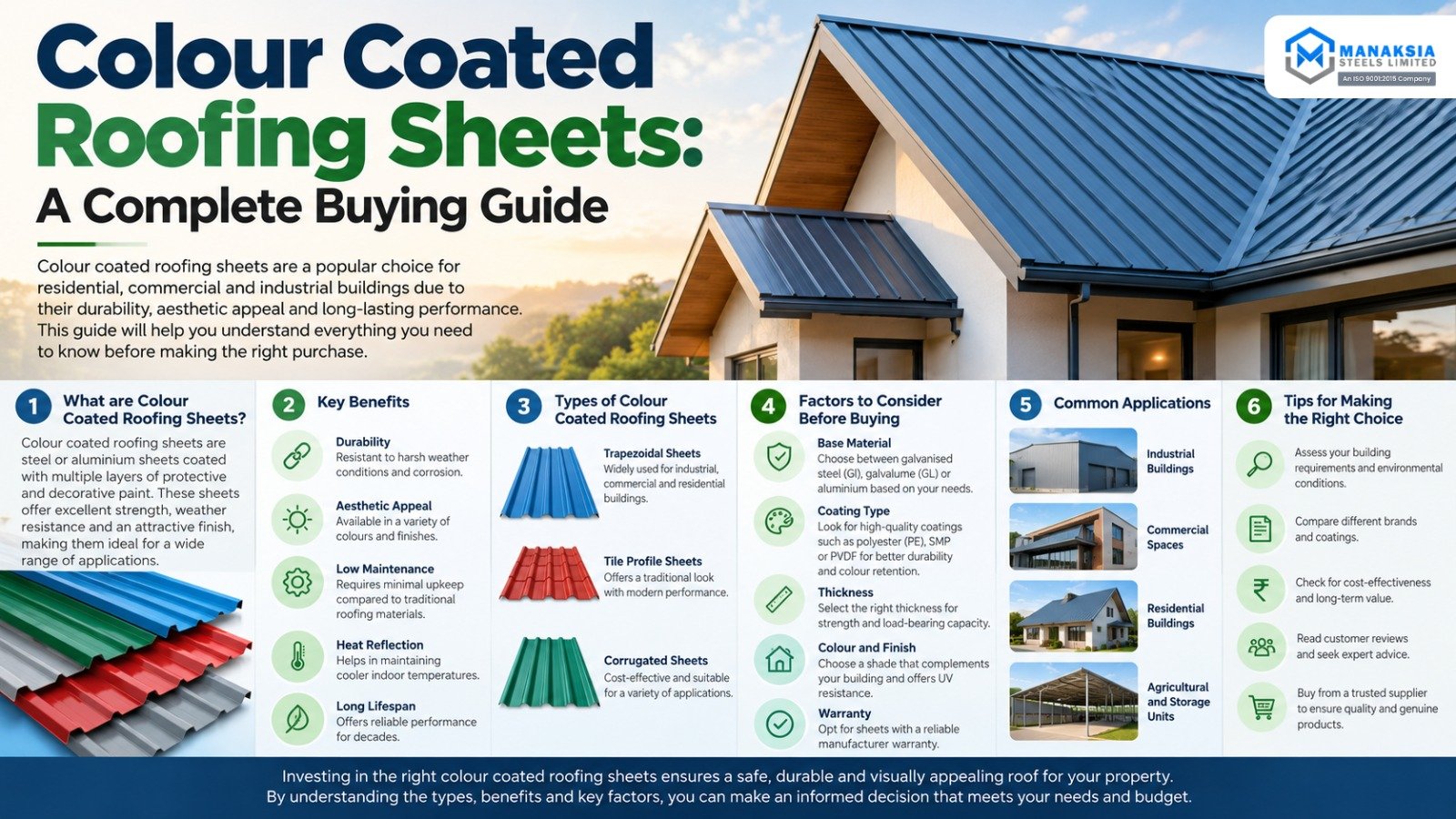
A roof does more than protect a building from rain and sunlight. It influences the structure’s durability, maintenance requirements, appearance, and long-term value. Whether you are constructing an industrial warehouse, a commercial facility, a factory, or a residential extension, choosing the right roofing material can make a significant difference. This is where colour coated roofing sheets offer a practical combination of steel strength, corrosion protection, and design flexibility. Available in different thicknesses, coating systems, colours, and profiles, these sheets can meet the requirements of a wide range of construction projects. However, not every roofing sheet is manufactured to the same specifications. Differences in base metal, metallic coating, paint quality, and thickness can affect how a sheet performs over time. This colour coated roofing sheets buying guide explains the essential factors to consider before purchasing, helping you compare products more confidently and select a solution suited to your project. What Are Colour Coated Roofing Sheets? Colour coated roofing sheets are steel sheets that receive a protective metallic coating and a layer of coloured paint through an industrial coating process. The metallic layer helps protect the steel against corrosion, while the paint system adds colour, surface protection, and visual appeal. Unlike conventional unpainted metal roofing, pre-painted steel combines functional protection with a finished appearance. It is available in different colours, thicknesses, widths, and profiles to suit specific construction requirements. At Manaksia Steels Limited, pre-painted steel products include SUPER COLOUR, a range of pre-painted galvanized and pre-painted aluminium-zinc-coated steel products. These sheets are designed for applications such as roofing, ridges, cladding, warehouses, and industrial buildings. The important consideration is not simply how a sheet looks when newly installed, but whether its specifications suit the building’s environment and intended use. Types of Colour Coated Roofing Sheets Understanding the different types of sheets is the first step towards making an informed purchase. 1. Pre-Painted Galvanized Steel (PPGI) PPGI stands for Pre-Painted Galvanized Iron, commonly used to describe pre-painted galvanized steel. The steel substrate receives a zinc coating before the paint system is applied. Zinc provides sacrificial protection against corrosion, helping protect the underlying steel when the coating is locally damaged, subject to the exposure conditions. PPGI sheets are suitable for many general roofing and cladding applications, including commercial buildings, sheds, and industrial structures. When comparing PPGI products, examine the zinc coating mass, base steel quality, paint system, and thickness rather than choosing solely by price or colour. 2. Pre-Painted Aluminium-Zinc-Coated Steel (PPGL) PPGL refers to pre-painted steel with an aluminium-zinc metallic coating. The aluminium and zinc components provide complementary protective properties. Aluminium contributes barrier protection, while zinc helps protect exposed steel in certain conditions. PPGL can be a suitable option for roofing and cladding projects where corrosion resistance and long-term material performance are important. Manaksia Steels offers pre-painted aluminium-zinc-coated steel within its colour-coated product portfolio. The appropriate specification should be selected according to the project environment and the manufacturer’s recommendations. 3. Profiled Colour Coated Roofing Sheets Flat coated steel can be formed into profiles designed for particular roofing applications. Common profile types include: The profile affects drainage, stiffness, effective coverage, and compatibility with the supporting structure. Always check the manufacturer’s profile dimensions and installation guidelines before finalising a selection. Colour Coated Sheet Specifications: What Should You Check? A roofing sheet’s appearance tells you very little about its complete technical performance. Reviewing the colour coated sheet specifications is essential when comparing quotations from different suppliers. 1. Roofing Sheet Thickness One of the most important purchasing decisions is selecting the correct roofing sheet thickness. Thickness affects material weight, handling, resistance to deformation, and structural performance. The right choice depends on factors such as the roof span, profile geometry, support spacing, wind loads, and intended application. A thinner sheet may be appropriate for certain light-duty applications, while a more demanding installation may require a thicker specification. Manaksia Steels lists colour-coated products across thickness ranges from 0.14 mm to 0.60 mm, depending on the product size and specification. These published ranges should not be interpreted as a recommendation that every thickness is suitable for every roof. Before purchasing, confirm whether the quoted thickness refers to base metal thickness (BMT) or total coated thickness (TCT). These measurements are not interchangeable, and comparing them incorrectly can lead to misleading price and quality comparisons. 2. Metallic Coating Mass The metallic coating is an important factor in corrosion protection. Manaksia Steels lists an aluminium-zinc coating range of AZ 70–150 GSM for its colour-coated products. The appropriate coating level depends on the product specification and exposure conditions. Buyers should verify the exact coating type and mass offered in the quotation rather than assuming that every sheet within a product range has the same coating. For buildings exposed to high humidity, industrial pollutants, or coastal conditions, selecting a suitable coating specification is particularly important. 3. Paint System and Colour Quality The paint system influences colour retention, surface appearance, and resistance to environmental exposure. Factors to consider include: A good-looking finish is valuable, but it should be supported by clear technical specifications and suitable quality controls. 4. Width, Length, and Profile Sheet dimensions influence material utilisation, installation time, and the number of joints required. Manaksia Steels lists different width options according to thickness, including 720 mm, 780 mm, 800 mm, 910 mm, and 1,220 mm for applicable products. Sheet length can be supplied as requested, subject to the product and manufacturing requirements. Remember that nominal sheet width and effective coverage width may differ because of side laps. Ask the supplier to confirm the actual coverage width when calculating quantities. What Makes Colour Coated Roofing Sheets Durable? Durability is not determined by a single specification. It results from the combination of material quality, protective coatings, manufacturing consistency, installation, and maintenance. Corrosion Protection Moisture, airborne pollutants, and environmental exposure can accelerate corrosion if the material is unsuitable for the conditions. The metallic coating helps protect the steel substrate. Choosing the correct coating system is particularly important for buildings located in humid, coastal, or industrial environments. Paint Adhesion
5 Things to Check Before Buying a Color Coated Sheet for Your Project
Buying roofing material can look deceptively simple. You choose a colour. You check the price. You place the order. But anyone who has managed a large roofing project knows that the real decision begins much earlier. Two color coated sheets can look almost identical from a distance and still differ significantly in substrate, coating, thickness, finish and intended application. And once thousands of square metres have been installed, discovering that you chose the wrong specification isn’t exactly a fun problem to solve. So before placing that order, here are five things worth checking. 1. Start With the Steel Substrate The colour is what you notice first. The substrate is what does much of the underlying work. A color coated sheet generally begins with a steel substrate that is processed and coated before receiving its final paint finish. The substrate grade and thickness should match the intended application and structural requirements. For roofing projects, buyers should consider factors such as: Thickness should never be selected simply because “thicker is always better.” The appropriate specification depends on engineering requirements. This is where discussing the application with the manufacturer or qualified technical professional becomes valuable. 2. Don’t Ignore the Metallic Coating Here’s a detail that can easily disappear behind the word “colour.” Before the final colour coating is applied, steel substrates may receive a metallic protective coating. For example, galvanised steel uses zinc as a protective coating, while aluminium-zinc coated steel uses an alloy coating system designed to provide enhanced corrosion resistance characteristics. The exact coating specification should be considered based on the environment and intended use. This becomes particularly important when the roof is exposed to: So when comparing color coated sheets, don’t ask only: “What colour is available?” Ask: “What is underneath the colour?” 3. Understand the Paint System The visible finish is more than decoration. The paint system contributes to the sheet’s appearance and surface protection. Modern pre-painted steel products can involve multiple coating stages, including surface preparation, primer application and top coating, followed by controlled curing. The choice of paint system can influence characteristics such as: Different projects may require different paint technologies. A warehouse with basic functional requirements and a premium commercial building may not need exactly the same specification. 4. Choose According to the Environment A roofing sheet doesn’t exist in a laboratory. It lives outside. That means its environment matters. A coastal building can experience saline exposure. A factory may operate in an environment containing industrial pollutants. A building in a hot region may experience significant solar and temperature exposure. This is why choosing color coated sheets purely on the basis of appearance or price can be misleading. Instead, consider the environment first. Coastal Locations Salt-laden air can accelerate corrosion-related challenges, making appropriate coating selection especially important. High-Rainfall Areas Roof design, drainage, overlaps and installation quality become particularly important. High-UV Environments The coating system should be appropriate for the expected level of sunlight exposure. Industrial Areas The surrounding environment and potential pollutants should be considered when selecting the appropriate product specification. The right sheet isn’t simply the one that survives the weather on paper. It is the one specified with the actual operating environment in mind. 5. Look at the Manufacturer, Not Just the Material This is perhaps the most overlooked part of the buying decision. A product specification tells you what you’re buying. A manufacturer tells you something about how consistently that specification can be produced. Colour-coated steel manufacturing involves multiple controlled stages. The substrate needs to be properly prepared. Coatings need to be applied consistently. Curing conditions need to be controlled. Finished material needs to meet the required specifications. For large projects, consistency matters. Imagine ordering material for a 50,000-square-foot warehouse and discovering noticeable variation in colour or finish between batches. That’s not merely an aesthetic inconvenience. It can create procurement, installation and project-management complications. What About PPGI and PPGL? You’ll often come across these terms when researching color coated sheets. PPGI PPGI generally refers to pre-painted galvanised iron/steel, where the steel substrate has a zinc coating before the paint system is applied. PPGL PPGL generally refers to pre-painted aluminium-zinc coated steel. Both are used across roofing and cladding applications, but their properties and suitability can differ depending on the project and environmental conditions. Therefore, selecting between them should be based on application requirements rather than simply choosing whichever term sounds more advanced. A Quick Checklist Before You Place the Order Before buying color coated sheets, ask your supplier for clarity on: ✓ Steel grade and thickness ✓ Metallic coating type and specification ✓ Paint/coating system ✓ Intended application ✓ Environmental suitability ✓ Profile and dimensions ✓ Manufacturing quality controls ✓ Warranty and product documentation These questions take minutes to ask. Fixing the consequences of a poorly specified roofing material can take considerably longer. Why Specification Matters More Than Appearance Walk into a showroom and a beautiful blue or grey sheet may immediately catch your attention. But roofing isn’t furniture. The most important qualities aren’t always visible. The substrate, metallic coating, paint technology, thickness and manufacturing process all contribute to how the product is expected to perform. That is why experienced procurement teams don’t buy based on appearance alone. They buy against a specification. Manaksia: Looking Beyond the Surface Manaksia Steels manufactures coated steel products including PPGI and PPGL solutions for applications such as roofing and cladding. Its range includes different coated steel options designed for varying project requirements, allowing buyers to look beyond colour and consider the complete product specification. For a project where roofing performance, appearance and long-term value all matter, that distinction becomes important. The Five-Question Test Before you approve your next color coated sheet order, ask: What is the substrate? What is the metallic coating? What is the paint system? Is it suitable for the environment? Can the manufacturer consistently deliver the required specification? If you can answer all five clearly, you’re no longer buying based on a colour chart. You’re making an informed material decision. And for something
GI Sheet Sizes, Weights & Prices: A Complete Guide for Buyers
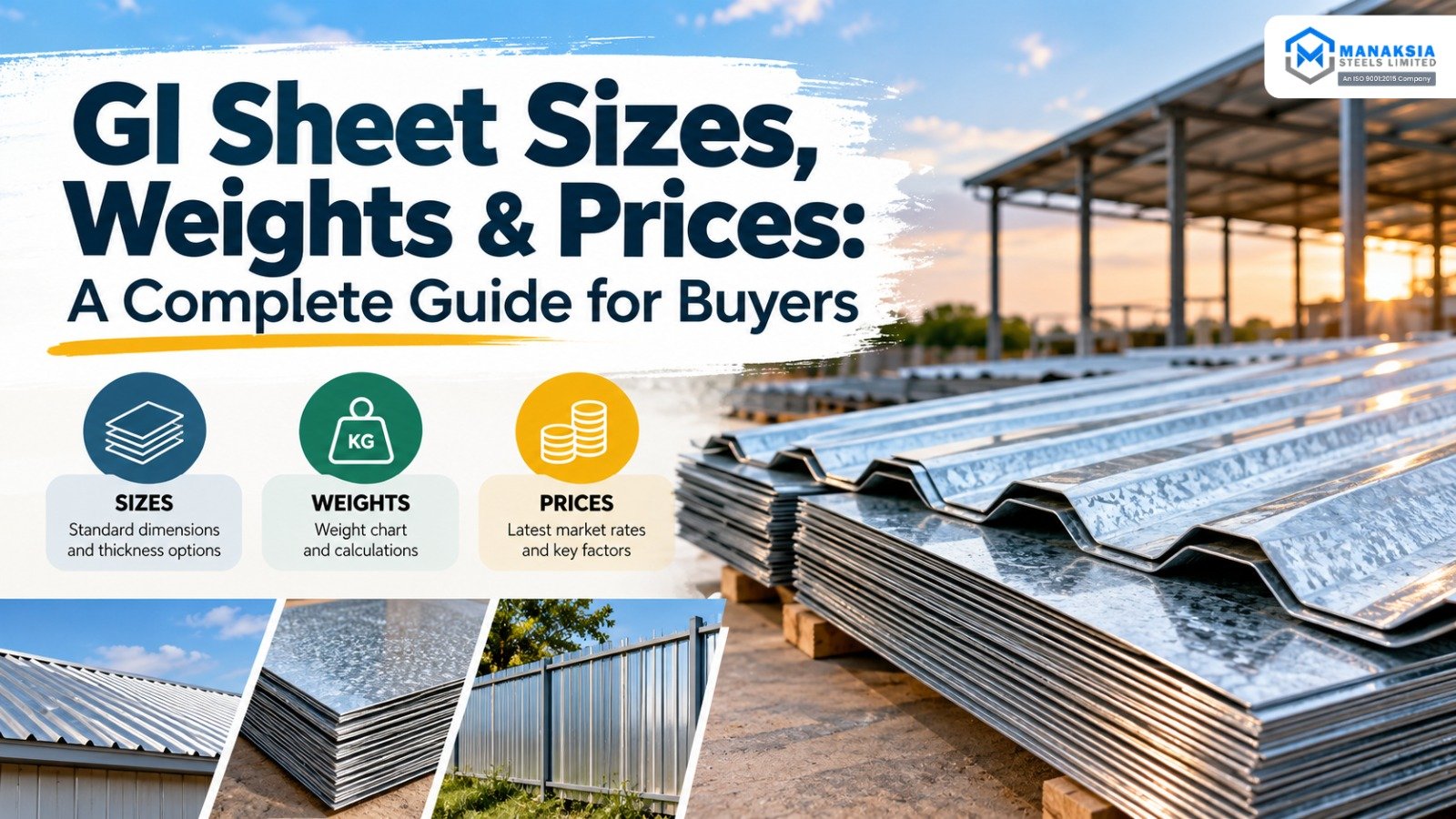
A contractor stands beside a half-finished warehouse, comparing three quotations for the same roofing project. The sheet lengths look similar. The prices, however, tell three different stories. One supplier quotes a lower rate per kilogram. Another offers a different thickness. The third includes delivery in the final amount. Which quotation actually offers better value? For builders, contractors, fabricators, and industrial buyers, understanding GI sheet size and price involves more than comparing numbers on a quotation. Sheet dimensions, thickness, weight, zinc coating, and transportation costs all influence the final purchase. This guide explains how GI sheets are measured, how their weight can be estimated, what affects pricing, and what buyers should check before placing an order. What Is a GI Sheet? A galvanized iron (GI) sheet is generally a steel sheet coated with zinc to help protect the underlying steel from corrosion. Although commonly called an iron sheet, the base material is typically steel. The zinc coating provides a protective barrier and helps improve resistance to corrosion. This makes GI sheets useful in construction and fabrication applications where moisture and changing environmental conditions may be a concern. Common applications include: The right product depends on the project’s technical requirements, exposure conditions, and intended use. A sheet suitable for one application may not be appropriate for another. Understanding GI Sheet Sizes and Standard Dimensions Before comparing prices, start with the dimensions. A sheet’s length, width, and thickness determine how much material it contains, how much it weighs, and how much coverage it provides. When comparing GI sheet size and price, make sure the products have equivalent specifications. Otherwise, a lower quotation may simply reflect a smaller or thinner sheet. Common GI Sheet Dimensions Depending on the manufacturer and product specification, buyers may encounter the following nominal lengths: Sheet length Approximate length in metres Typical consideration 6 feet 1.83 m Smaller structures and fabrication 8 feet 2.44 m General construction requirements 10 feet 3.05 m Larger roofing and cladding sections 12 feet 3.66 m Extended coverage and industrial applications These are illustrative examples, not a guarantee of availability. Actual dimensions and widths vary by supplier and product type, so confirm the specifications before ordering. For roofing and cladding, there is another detail worth checking: effective coverage. Adjacent sheets often overlap during installation, which means the usable covered width may be less than the sheet’s overall width. That difference can affect the total quantity required for a project. Before finalising an order, confirm the sheet length, width, thickness, dimensional tolerances, and whether the product is a plain GI sheet or a profiled roofing sheet. GI Sheet Thickness and Gauge Explained Thickness influences a sheet’s weight, rigidity, and price. A thinner sheet may suit certain lightweight applications, while a thicker sheet may be needed where greater strength or stiffness is required. But thicker does not automatically mean better. The correct specification depends on the application, structural support, environmental exposure, and applicable engineering requirements. What Does Gauge Mean? Gauge is a numbering system traditionally used to describe sheet-metal thickness. The relationship between gauge and thickness can be confusing because different gauge systems may use different measurements. In commonly used sheet-metal gauge systems, a higher gauge number generally indicates a thinner sheet. The exact thickness associated with a gauge number, however, depends on the applicable standard and material specification. For a more reliable comparison, ask suppliers to state the actual thickness in millimetres. Also clarify whether the quoted measurement refers to the base steel thickness or the total coated thickness. This helps prevent a common purchasing mistake: comparing two sheets by their gauge labels alone when their actual specifications may differ. How to Select the Right Thickness Consider these factors before choosing a sheet: The objective is to select a product that meets the project’s requirements without paying for specifications that are unnecessary for the application. How to Calculate GI Sheet Weight Weight matters because many steel quotations are based on a per-kilogram rate. Estimating the weight of a sheet helps buyers compare quotations, calculate material requirements, and plan transportation. A commonly used formula for estimating the weight of the steel base is: Approximate steel weight (kg) = Length (m) × Width (m) × Thickness (mm) × 7.85 Here, 7.85 is the approximate density factor used for steel when dimensions are entered in these units. Example: Calculating Sheet Weight Suppose a sheet has the following illustrative dimensions: Using the formula: 2.44 × 1.22 × 0.5 × 7.85 = approximately 11.7 kg The estimated base steel weight is therefore around 11.7 kg. This is a calculation example, not a specification for every 8-foot GI sheet. Actual weight can vary with dimensions, thickness tolerances, coating, and manufacturing specifications. For bulk orders, confirm the supplier’s stated weight and the basis on which the material is sold. What Determines GI Sheet Price Per Kg? The GI sheet price per kg is influenced by more than the price of steel alone. Two products that appear similar may have different rates because their thickness, zinc coating, order quantities, and commercial terms are not identical. 1. Steel Market Conditions Steel prices can change with raw-material costs, market demand, supply conditions, and other commercial factors. A quotation obtained earlier may not reflect the rate available when an order is placed. 2. Sheet Thickness and Weight Thicker sheets generally contain more steel per unit area. This increases their weight and affects the total material cost. When comparing quotations, make sure the sheets have equivalent thicknesses and dimensions. 3. Zinc Coating Specification The zinc coating is an important part of a GI sheet‘s corrosion protection. Different coating specifications can influence the product’s cost and suitability for particular environments. Ask the supplier to confirm the relevant coating specification instead of assuming that all galvanized sheets offer the same level of protection. 4. Order Quantity The number of sheets required can affect commercial terms, handling, and transportation costs. For larger orders, request a quotation that clearly states the applicable quantity and pricing conditions. 5. Transportation and Other Charges
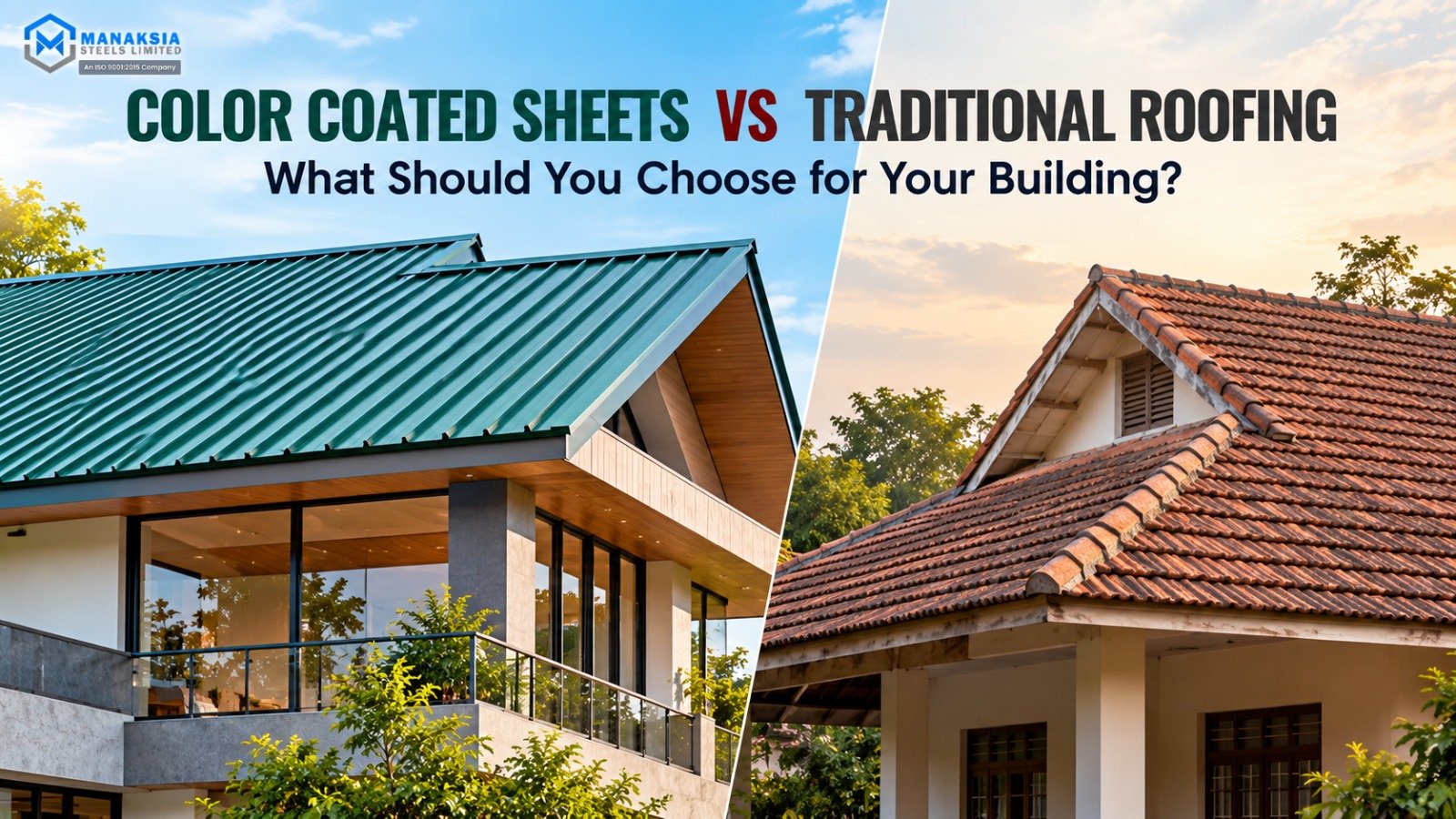
Color Coated Sheets vs Traditional Roofing: What Should You Choose for Your Building?
Imagine standing inside a newly completed warehouse during the first heavy monsoon shower. You can hear the rain hitting the roof. Outside, water is rushing down the drainage system. Inside, the building remains protected, dry and operational. Now imagine making the same decision before construction begins. You have several roofing options. Each comes with different characteristics, costs, maintenance considerations and visual possibilities. So, where do color coated sheets fit into the picture? The answer isn’t that one roofing material is universally right for every building. The smarter question is which material matches the building’s environment, purpose, design and long-term requirements. What Are Traditional Roofing Materials? “Traditional roofing” can refer to several different materials depending on the building and location. Concrete slabs, clay tiles, asbestos-cement sheets, uncoated metal sheets and other conventional systems have all been used extensively over the years. Each has its own advantages. But construction requirements have changed. Large industrial buildings increasingly need roofing systems that combine relatively lightweight construction with durability, ease of installation and a consistent finished appearance. This is one area where color coated sheet products have become increasingly relevant. Color Coated Sheets: More Than Just a Painted Roof A colour-coated steel sheet typically starts with a steel substrate that receives protective treatment and coating layers before the final paint finish. The result is a product that combines the inherent properties of steel with a protective and decorative coating system. Depending on the product, the underlying substrate may be galvanised steel or an aluminium-zinc coated steel such as PPGL. That distinction matters. The performance of a roofing sheet isn’t determined by its colour alone. It depends on the entire system: substrate, metallic coating, paint technology, thickness, profile and installation. So, How Do They Compare? 1. Appearance Traditional roofing materials can have a distinctive appearance, but options may be relatively limited depending on the material. Modern color coated sheets, on the other hand, are available in different colours and finishes. This gives architects and building owners greater flexibility when coordinating roofs with façades, walls and surrounding structures. For commercial or industrial buildings where visual presentation matters, that flexibility can be useful. 2. Weight and Structural Planning Steel roofing sheets are relatively lightweight compared with many conventional roofing systems. Lower roof dead loads can influence structural planning, although the final design must always be determined by qualified structural professionals based on the building’s location, loading conditions, span and other engineering considerations. For large-span industrial structures, this characteristic can be particularly relevant. 3. Installation The installation process varies according to the roofing profile and building design. However, metal roofing systems can often be installed using relatively straightforward fastening systems and supporting structures. The real advantage isn’t simply speed. A well-planned roofing installation can reduce disruption to the wider construction schedule. Of course, workmanship remains critical. Even a technically advanced color coated sheet can perform poorly if the roof is improperly designed or installed. 4. Maintenance Every roof requires maintenance. The important question is how easily potential problems can be identified and managed. Metal roofing systems allow inspection of visible surfaces, fasteners, overlaps and drainage points. Regular inspection can help identify damage or installation-related issues before they become larger problems. The coating system can also play an important role in maintaining the exposed surface. What About Weather? This is where the choice of roofing material becomes more application-specific. India’s climate isn’t one climate. A building in a humid coastal environment faces different conditions from one in a dry inland region. A factory in an area with heavy monsoon rainfall may have different requirements from a commercial building in a relatively dry climate. This is why selecting color coated sheets should involve understanding: The coating system should be selected according to these environmental considerations. Don’t Make the Price the Only Deciding Factor Here’s a common mistake in construction procurement: comparing the price per sheet without comparing the product specification. Two sheets can look almost identical while having different substrate thicknesses, metallic coating systems, paint specifications and performance characteristics. A lower upfront price doesn’t necessarily mean lower total project cost. Consider the entire lifecycle: Purchase → Installation → Maintenance → Replacement → Downtime For a large warehouse or manufacturing facility, even a small maintenance issue can become expensive if it interrupts operations. That’s why experienced buyers evaluate the specification, not simply the invoice price. Where Do Color Coated Sheets Make Sense? They can be considered for applications such as: Industrial Buildings Factories and production facilities often require practical roofing solutions with consistent appearance and protection. Warehouses Large warehouses can benefit from lightweight roofing systems while maintaining the required structural and environmental specifications. Commercial Buildings For commercial projects, appearance can matter alongside performance. Colour and finish options provide additional design flexibility. Sheds and Utility Structures Coated steel can also be used across various utility and semi-industrial structures, subject to the appropriate product specification. A Simple Decision Framework Before choosing your roofing material, ask five questions: 1. Where is the building located? Climate and environmental exposure matter. 2. What will the building be used for? A warehouse, factory and commercial building may have different requirements. 3. What coating system is appropriate? Look beyond the colour and understand the protective system. 4. What thickness and profile does the project require? These should be selected according to structural and application requirements. 5. Who is manufacturing the product? Consistency in substrate quality, coating application and manufacturing controls can make a significant difference. Why Manufacturer Expertise Matters Roofing is not a product category where appearance tells the whole story. A high-quality color coated sheet is the result of controlled manufacturing—from substrate preparation and metallic coating through to primer, top coat and curing. This is particularly important when the material is being purchased for a large project where consistency across thousands of square metres matters. Manaksia Steels manufactures coated steel products including PPGI and PPGL solutions for roofing and related applications. Its product range is designed to address different project requirements, allowing buyers to consider the appropriate
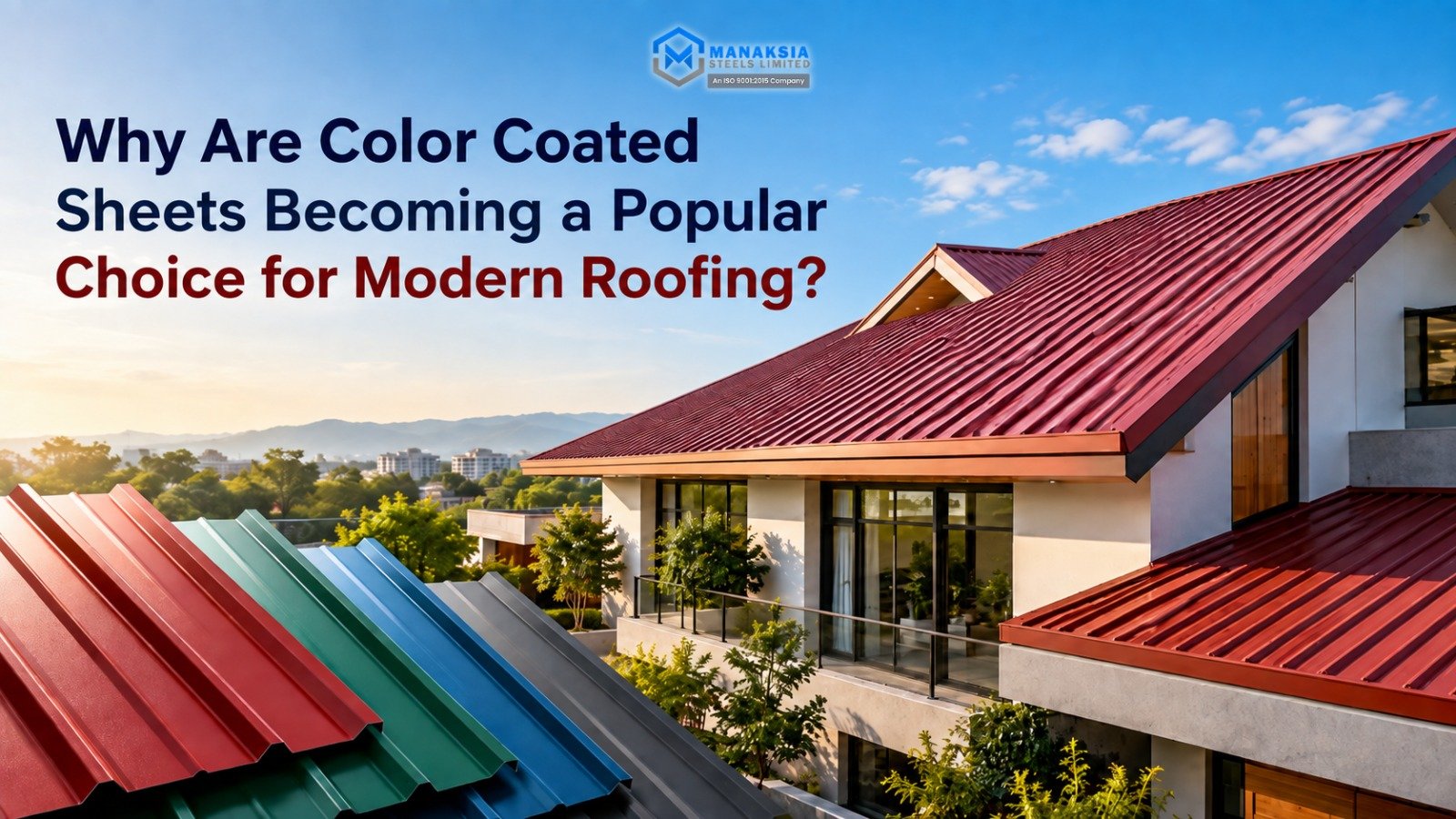
Why Are Color Coated Sheets Becoming a Popular Choice for Modern Roofing?
A roof used to have one job: keep the rain out. Today, that is only the beginning. For industrial buildings, warehouses, commercial spaces, factories and even modern architectural projects, the roof has become part of the building’s identity. It needs to withstand changing weather, offer reliable protection, complement the structure and, increasingly, look good while doing it. That is where color coated sheet solutions have found their place. Combining the strength of steel with a protective coating and a range of finishes, these sheets offer a practical alternative to conventional roofing materials. But their popularity isn’t simply about colour. There is considerably more happening beneath that finished surface. What Makes a Color Coated Sheet Different? At its core, a color coated sheet is a steel sheet that has been treated and coated to provide additional protection and a finished appearance. The process generally involves preparing the steel surface, applying protective coating layers and then adding a carefully controlled paint system. The result is a sheet designed to combine structural performance with surface protection and visual appeal. This matters because exposed steel has to deal with more than rain. It faces humidity, sunlight, temperature fluctuations, dust and pollutants. In many parts of India, monsoon conditions can make corrosion protection particularly important. A properly manufactured coated steel product therefore isn’t simply a sheet of coloured metal. Its performance depends on the substrate, metallic coating, paint system, coating thickness and manufacturing controls. Why Are Color Coated Sheets Gaining Attention? 1. Protection Goes Beyond the Surface Appearance When people first hear “colour coated,” they often think about the colour. But the more important conversation is what sits underneath it. Steel substrates can be provided with protective metallic coatings, such as zinc or aluminium-zinc based systems, depending on the product specification. These layers help protect the underlying steel from environmental exposure. The paint coating then provides another layer of protection while creating the desired finish. That combination is one reason color coated sheets are increasingly considered for demanding roofing and cladding applications. 2. A Roof Doesn’t Have to Look Industrial Traditional industrial roofing often came with a fairly predictable appearance: functional, durable and not particularly exciting. Modern architecture has changed that expectation. Buildings today may use contrasting roof and wall colours, coordinated façades and cleaner architectural lines. Colour availability allows roofing and cladding to become part of the overall design rather than something that simply sits on top of the structure. For a warehouse, factory or commercial building, that can make a noticeable difference to the finished appearance. 3. They’re Suitable for More Than Just Roofing One of the interesting things about coated steel is its versatility. Depending on the product specification and application, coated sheets can be used for: This makes color coated sheet products relevant to both structural and aesthetic requirements. What Should You Check Before Choosing One? Not every coated sheet is automatically suitable for every application. This is where buying based purely on colour or price can become a mistake. Check the Steel Substrate The substrate is the foundation of the product. Its thickness, grade and coating system should be appropriate for the intended application. Look at the Coating System The metallic coating and paint system influence how the sheet performs in its environment. For projects exposed to demanding weather conditions, buyers should understand what type of metallic coating is being used and what paint technology has been specified. Consider the Environment A building near the coast may face different corrosion challenges from a warehouse located inland. Similarly, a structure exposed to intense sunlight and large temperature variations may have different requirements. The right color coated sheets should therefore be selected according to the application—not simply according to the colour catalogue. The Technology Behind the Colour A modern colour-coated steel production line involves considerably more than simply painting steel. The steel strip is prepared, cleaned and treated before coating. A metallic protective layer may be applied, followed by primer and top-coat systems under controlled manufacturing conditions. The coating needs to adhere properly and maintain consistency across the strip. This is why manufacturing expertise matters. Small differences in substrate preparation, coating thickness, curing conditions or paint formulation can influence the finished product’s appearance and performance. A More Practical Way to Think About Colour-Coated Roofing Instead of asking: “Which colour should I choose?” A better starting point is: “What does this building need its roofing system to withstand?” Once the application is understood, decisions about substrate, coating, profile, thickness, finish and colour become much easier. That’s particularly important for large projects where replacing roofing later can involve significant labour, downtime and cost. Where Manaksia Fits In For manufacturers and project buyers looking at coated steel solutions, Manaksia Steels offers products designed around different application and performance requirements. Its range includes colour-coated steel products based on coated steel substrates, including PPGI and PPGL solutions. The focus isn’t simply on producing a colourful sheet. It is about combining the steel substrate, protective coating technology and finish to create a product suited to modern construction requirements. The Bottom Line The growing interest in color coated sheet products reflects a broader change in construction. Roofs are no longer viewed purely as protective covers. They are expected to contribute to durability, efficiency, appearance and the overall design of a building. And that is perhaps why color coated sheets have moved from being a niche architectural choice to an increasingly familiar solution across industrial, commercial and modern construction. When selecting one, however, look beyond the colour. Understand the steel. Understand the coating. Understand the environment. Because a good roof should look right—but more importantly, it should perform right. Looking for coated steel solutions for your next roofing or cladding project? Explore Manaksia Steels’ range of colour-coated products and identify the specification suited to your application.
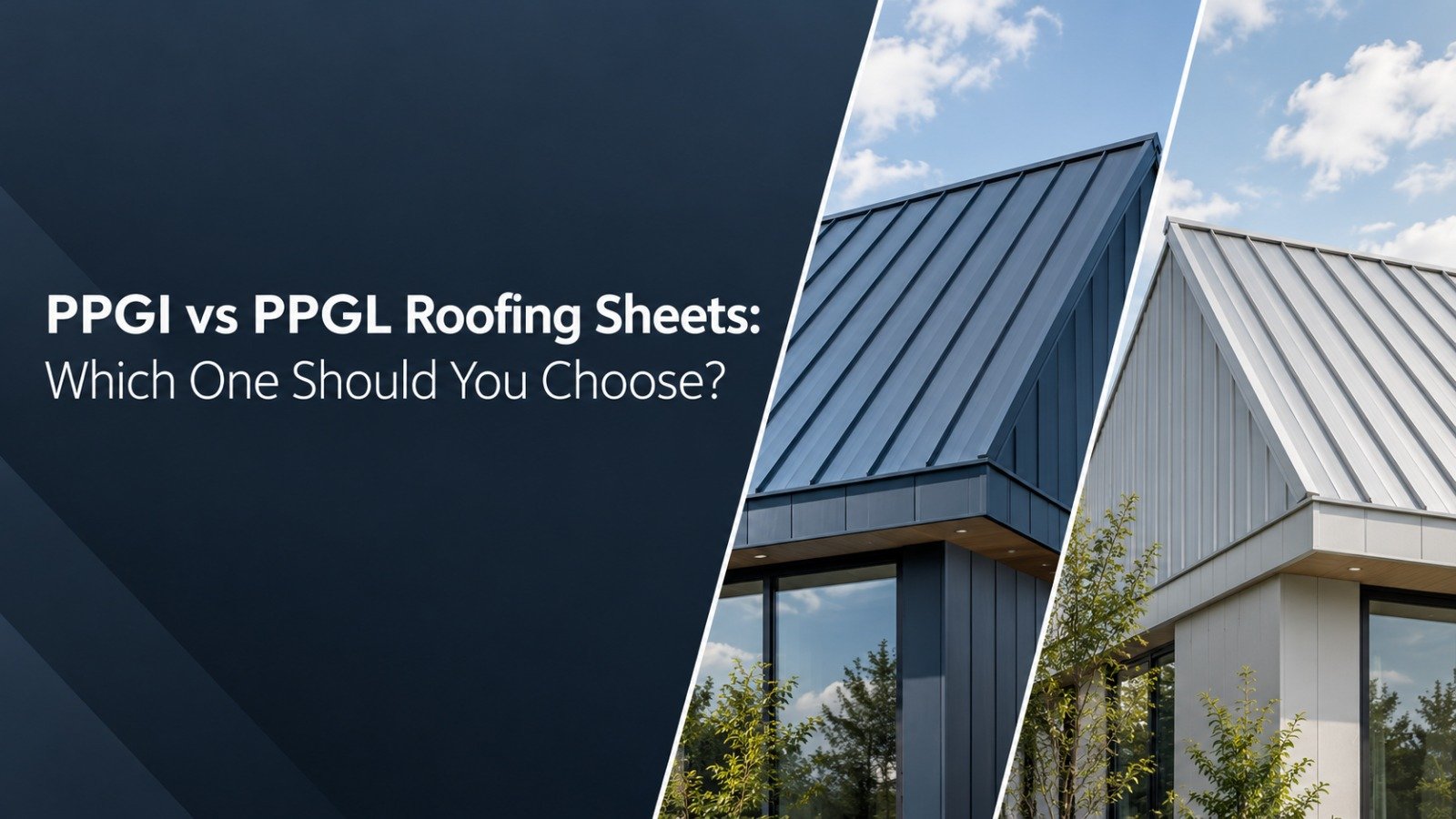
PPGI vs PPGL Roofing Sheets: Which One Should You Choose?
A roof does much more than protect a building from rain and sunlight. It needs to withstand changing weather conditions, manage heat, resist corrosion, retain its appearance and deliver reliable performance for years. That is why selecting the right roofing sheet is not simply about choosing a colour or thickness. Two popular options in modern construction are PPGI roofing sheets and PPGL roofing sheets. At first glance, they may look almost identical. Both are available in a wide range of colours and finishes, and both combine the strength of steel with protective metallic and paint coatings. But there is an important difference beneath the surface. PPGI uses a zinc coating, while PPGL uses an aluminium-zinc alloy coating. This difference affects how each sheet protects its steel substrate and how it performs under different environmental conditions. So, when comparing PPGI vs PPGL roofing sheets, which one should builders, architects and project engineers choose? The answer depends on the application, environment and required performance. What Is PPGI Roofing Sheet? PPGI stands for Pre-Painted Galvanised Iron/Steel. The process begins with a steel substrate coated with zinc to provide protection against corrosion. The galvanised steel is then cleaned, treated and coated with an engineered paint system to provide the required colour, appearance and additional surface protection. The result is a pre-painted galvanized steel roofing sheet that combines: Because the coating is applied in a controlled manufacturing environment before the sheet reaches the construction site, PPGI roofing sheets can offer a consistent and uniform finish. Where Are PPGI Roofing Sheets Commonly Used? PPGI roofing sheets can be suitable for a variety of applications, including: For projects where appearance, versatility and dependable corrosion protection are important considerations, PPGI remains a widely used coated steel roofing solution. What Is PPGL Roofing Sheet? PPGL stands for Pre-Painted Galvalume/Aluminium-Zinc Coated Steel. Instead of a predominantly zinc coating, the steel substrate receives an aluminium-zinc alloy coating. The aluminium component contributes barrier protection against the surrounding environment, while zinc contributes sacrificial protection to exposed areas. After the metallic coating process, the steel can be further processed with a pre-painted coating system to achieve the desired colour, finish and performance characteristics. This combination makes PPGL roofing sheets relevant for applications where exposure to weather, heat and corrosion is an important consideration. Why Is the Coating Important? Think of the steel core as the structural backbone of the roofing sheet. The metallic coating acts as its first line of defence. The paint system then provides another protective layer while also contributing significantly to the sheet’s visual appearance and surface performance. That means choosing between PPGI and PPGL roofing sheets is not simply about the product name. The metallic coating, coating thickness, steel grade, paint technology and manufacturing quality all play an important role in determining the overall performance of the roofing system. PPGI vs PPGL Roofing Sheets: What Is the Difference? The fundamental difference between PPGI vs PPGL lies in the metallic coating applied to the steel substrate. Feature PPGI Roofing Sheets PPGL Roofing Sheets Full form Pre-Painted Galvanised Steel Pre-Painted Aluminium-Zinc Coated Steel Metallic coating Primarily zinc Aluminium-zinc alloy Corrosion protection mechanism Zinc provides barrier and sacrificial protection Aluminium contributes barrier protection while zinc offers sacrificial protection Surface finish Wide range of colours and finishes Wide range of colours and finishes Heat performance Influenced by colour and coating system Strong reflective potential depending on coating and finish Typical applications Residential, commercial and industrial Roofing, industrial, commercial and exposed applications Maintenance Depends on environment and installation Depends on environment and installation The basic distinction is straightforward, but the more important question is: What does this difference mean for your actual roofing application? PPGI vs PPGL: Which Offers Better Corrosion Protection? Corrosion is one of the biggest considerations when selecting a metal roofing sheet. Rain, humidity, industrial pollutants, coastal air and prolonged exposure to moisture can gradually affect inadequately protected steel. With PPGI roofing sheets, the zinc coating protects the steel through both barrier protection and sacrificial protection. Zinc can continue to provide protective action when small areas of the coating become exposed. PPGL roofing sheets use an aluminium-zinc alloy coating. Aluminium contributes barrier protection, while zinc provides sacrificial protection. This combination is designed to provide robust protection in demanding outdoor applications. However, it would be too simplistic to say that one material will always last longer than the other. Actual roofing performance depends on the complete product and project specification. Important factors include: For architects and project engineers, the better question is therefore not simply: “PPGI or PPGL?” Instead, ask: “Which coating specification is appropriate for this project’s exposure conditions?” Does PPGL Reflect More Heat Than PPGI? Thermal performance has become increasingly important in modern construction. In hot climates, roofing sheets are continuously exposed to solar radiation. The choice of roofing system can therefore influence the thermal environment inside a building. PPGL roofing sheets are often considered for applications where reflective performance is important because of the characteristics of their aluminium-zinc metallic coating. But there is an important qualification. Roof colour and the complete coating system also influence solar performance. A light-coloured, highly reflective roofing surface can behave very differently from a dark-coloured surface, regardless of whether the substrate is PPGI or PPGL. Other factors such as: also influence the thermal performance of a building. Therefore, rather than assuming that PPGL is automatically a “cooler” roofing solution, architects should evaluate the entire roofing system and its intended application. PPGI vs PPGL: What About Service Life? There is no single number that accurately describes the service life of every PPGI roofing sheet or PPGL roofing sheet. Why? Because a roof installed beside a humid coastline does not experience the same conditions as one installed in a relatively dry inland environment. Similarly, an industrial building exposed to pollutants may have very different requirements from a residential structure. The service performance of a coated roofing sheet depends on factors such as: This is why buyers should avoid selecting a roofing sheet based solely on an
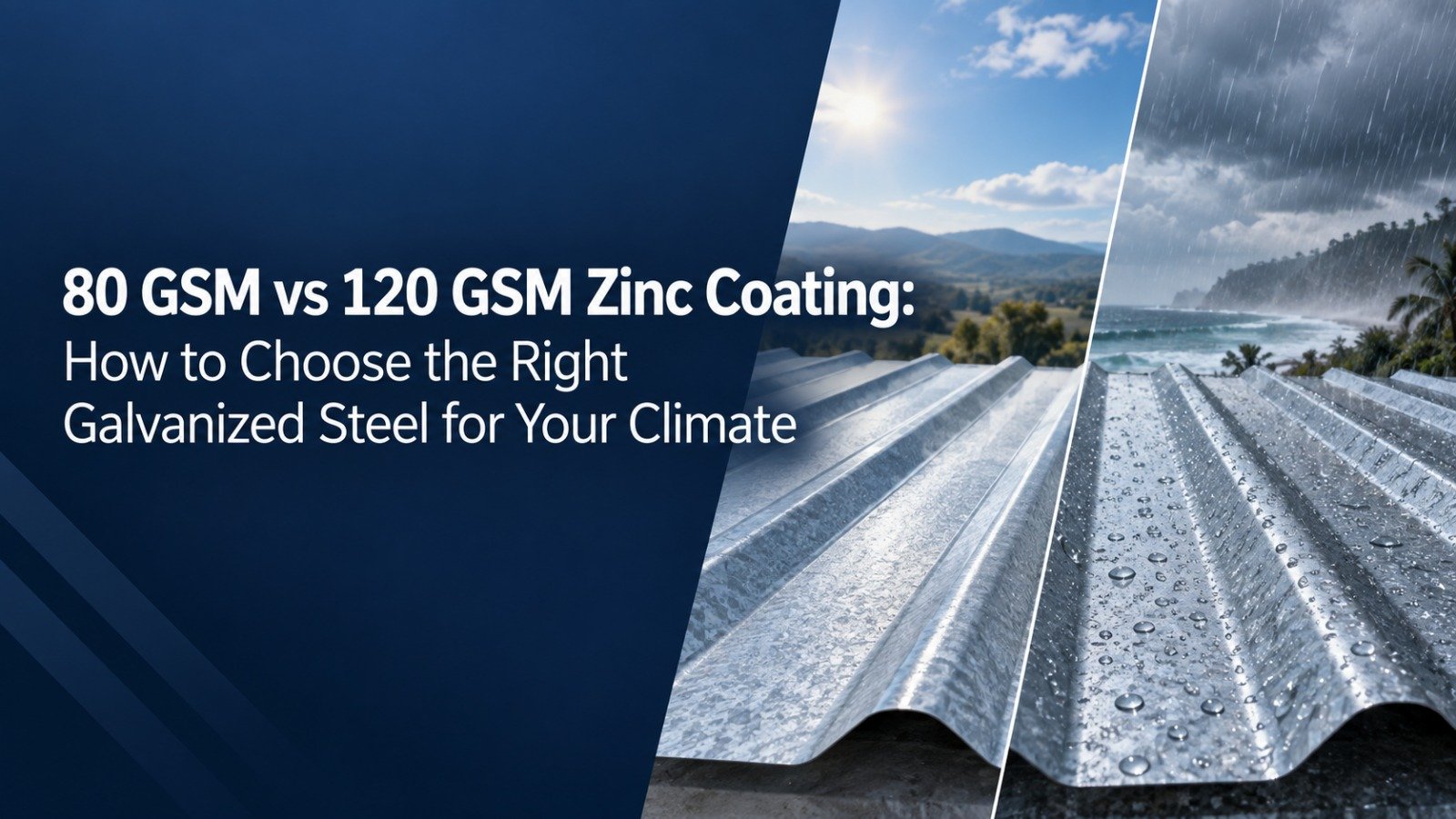
80 GSM vs 120 GSM Galvanized Steel: Which Coating Is Right for Your Application?
When buying galvanized steel, industrial buyers naturally look at the basics first: steel grade, thickness, dimensions and price. But there is another specification that deserves just as much attention—GSM. You may come across specifications such as 80 GSM galvanized steel, 100 GSM or 120 GSM galvanized steel while sourcing steel for construction or industrial applications. At first glance, the difference may seem small. But GSM represents something important: the zinc coating weight applied to the steel surface. When steel is expected to withstand years of rain, humidity, pollution or coastal exposure, the galvanized steel coating becomes an important part of its corrosion protection strategy. So, when should an industrial buyer choose 80 GSM vs 120 GSM galvanized steel? And which zinc coating weight is more suitable for a particular application? The answer starts with understanding what GSM actually means. What Does GSM Mean in Galvanized Steel? GSM stands for grams per square metre. In galvanized steel, GSM indicates the mass of zinc coating per unit area of the steel surface. In simple terms, it helps buyers understand how much zinc has been applied to the steel. Generally: Higher coating weight = more zinc available to provide corrosion protection, all other factors being equal. Therefore, 80 GSM galvanized steel has a lower zinc coating weight than 120 GSM galvanized steel. However, buyers should not treat GSM as a direct guarantee of service life. The performance of zinc coated steel depends on several factors, including the coating specification, steel quality, atmospheric conditions, fabrication, installation and maintenance. The zinc coating is an important part of the protection system—but it is not the entire equation. Why Does Zinc Protect Steel? Steel is strong, versatile and widely used across construction and industrial applications. However, untreated steel can be vulnerable to corrosion when exposed to moisture and oxygen. Galvanization helps address this problem by applying a protective zinc coating for steel. Zinc protects the underlying steel in two important ways. 1. Barrier Protection The zinc layer creates a barrier between the steel and the surrounding environment, reducing direct exposure to moisture and atmospheric elements. 2. Sacrificial Protection Zinc is more chemically active than steel. If a small area of the coating is damaged or exposed, zinc can preferentially corrode and help protect the exposed steel under many conditions. This sacrificial protection is one of the key reasons galvanized steel for corrosion protection is widely used across demanding industrial and construction applications. 80 GSM vs 120 GSM Galvanized Steel: What Actually Changes? The most obvious difference between 80 GSM and 120 GSM galvanized steel is the amount of zinc coating. Parameter 80 GSM Galvanized Steel 120 GSM Galvanized Steel Zinc coating weight Lower Higher Zinc available for protection Lower Higher Relative coating thickness Lower Higher Potential corrosion protection Good when appropriately specified Greater coating reserve, subject to environment Suitable application Lower-to-moderate exposure applications Moderate-to-more demanding exposure applications Key buyer consideration Application and climate Application, climate and required durability The important point is that 120 GSM galvanized steel does not automatically mean it is better for every project. The right galvanized steel coating weight depends on where the material will be installed, the environmental conditions and the required performance. Why Climate Matters When Choosing Zinc Coating Weight Imagine two steel structures. One is located in a relatively dry inland environment. The other is positioned in a humid coastal region where the atmosphere contains salt-laden moisture. They may look identical on paper, but their corrosion exposure is not the same. That difference should influence the selection of galvanized steel coating. Dry and Lower-Exposure Environments In relatively mild atmospheric conditions, a lower coating specification such as 80 GSM galvanized steel may be appropriate for certain applications, provided it meets the required product standard and project specification. Potential applications may include: However, the decision should always be based on the required specification rather than simply choosing the lowest zinc coating weight. Humid and High-Rainfall Regions Humidity and frequent rainfall increase the opportunity for moisture to interact with the steel surface. For outdoor structures in such environments, buyers may consider a higher zinc coating weight where the application and applicable standard call for it. A 120 GSM zinc coating provides a greater quantity of zinc available for protective action compared with an 80 GSM coating. However, drainage, water retention, design details and installation quality remain important considerations when evaluating galvanized steel durability. Coastal and Salt-Laden Environments Coastal environments can be particularly challenging for steel because of salt-containing moisture. For such applications, corrosion protection for galvanized steel needs to be treated as a complete system rather than relying on a single specification. Buyers should evaluate: For more aggressive environments, selecting a higher galvanized steel coating weight may provide additional protective reserve, but the complete corrosion protection system must be considered. Does 120 GSM Last 50% Longer Than 80 GSM? This is a common assumption—but it is not that simple. A 50% increase in zinc coating weight does not mean the steel will automatically provide 50% more service life. Why? Because corrosion rates vary significantly depending on environmental conditions. The same galvanized steel coating can behave differently depending on: Therefore, GSM should be viewed as one of the important factors influencing galvanized steel durability, rather than a simple mathematical prediction of lifespan. 80 GSM vs 120 GSM: A Buyer’s Decision Framework Instead of asking: “Which one is cheaper?” Industrial buyers should ask: “What level of corrosion protection does this application actually require?” A practical decision framework looks like this: Step 1: Identify the Environment Is the steel going indoors, outdoors, near the coast, in a humid region or in an industrial atmosphere? Step 2: Understand the Exposure Will the steel remain dry most of the time, or will it regularly experience rain, condensation or moisture? Step 3: Define the Required Service Performance How long is the structure expected to perform, and what level of maintenance is practical? Step 4: Check the Applicable Specification Don’t select galvanized steel GSM in isolation. Verify the applicable

Planning a Shed or Terrace Roof? Here’s Why Colour Coated Steel Sheets Are the Smart Choice.
The quality-to-cost ratio when building a shed, garage, or any long-term storage unit has always been a point of concern for Indian homeowners, farmers, and small business vendors with a bit of experience under their belt, especially from the older generations. The ideal choice would be something solid, leak-proof during the monsoons, resistant to rust, and that would not need repainting or repairs every other year. Roofing sheets, in particular, colour coated steel sheets, have been developed to precisely meet those requirements. However, many people still prefer using outdated and less durable materials such as asbestos sheets or uncoated galvanised iron due to a lack of information regarding modern coated sheets. The focus of this article is to guide you why colour-coated steel roofing is a worthy investment, especially if your construction site is in rural regions, you are managing a farmhouse, or you wish to build a simple storage shed on your property.
