Imagine standing inside a newly completed warehouse during the first heavy monsoon shower.
You can hear the rain hitting the roof. Outside, water is rushing down the drainage system. Inside, the building remains protected, dry and operational.
Now imagine making the same decision before construction begins.
You have several roofing options. Each comes with different characteristics, costs, maintenance considerations and visual possibilities.
So, where do color coated sheets fit into the picture?
The answer isn’t that one roofing material is universally right for every building. The smarter question is which material matches the building’s environment, purpose, design and long-term requirements.
What Are Traditional Roofing Materials?
“Traditional roofing” can refer to several different materials depending on the building and location.
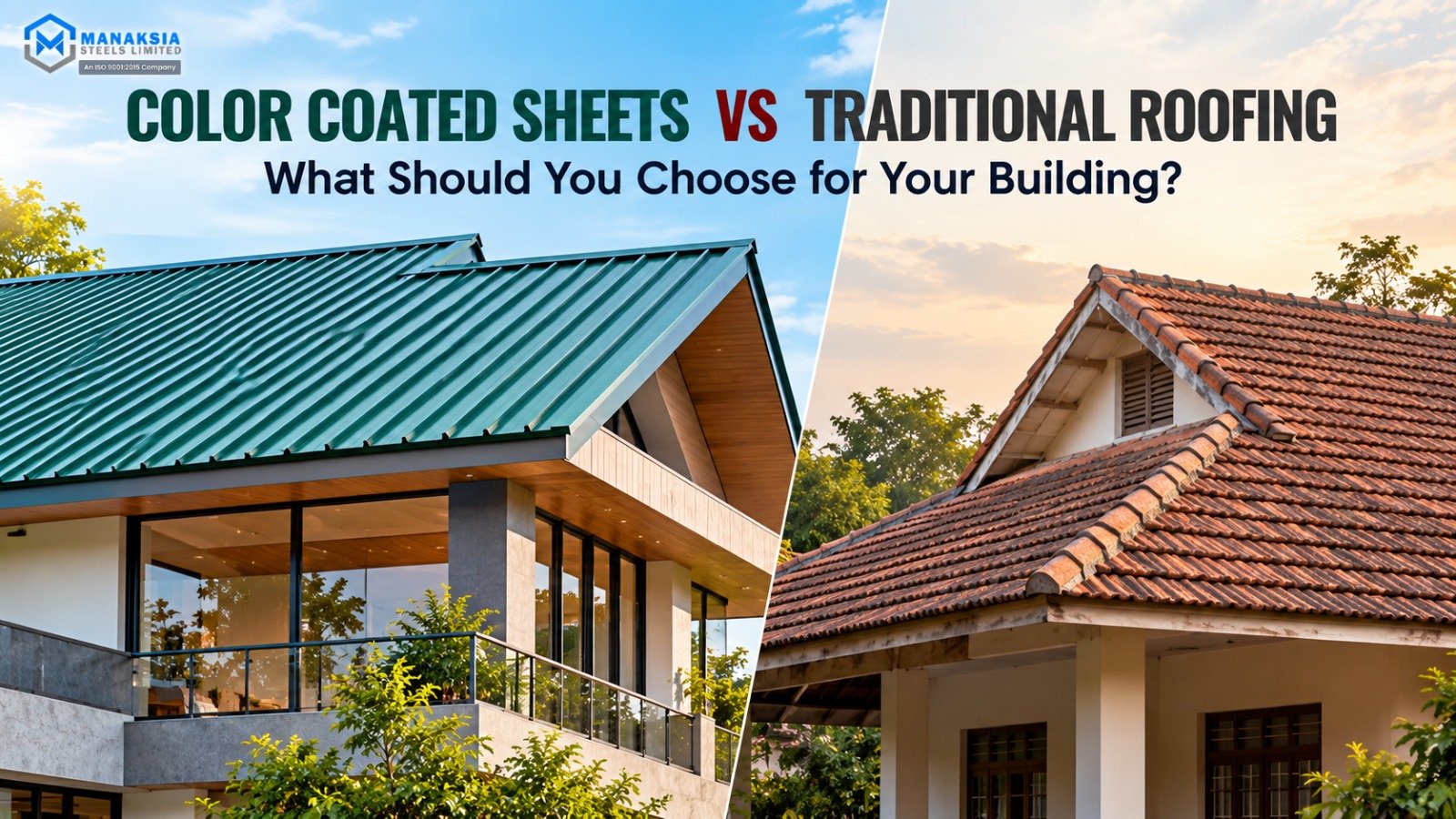
Concrete slabs, clay tiles, asbestos-cement sheets, uncoated metal sheets and other conventional systems have all been used extensively over the years.
Each has its own advantages.
But construction requirements have changed. Large industrial buildings increasingly need roofing systems that combine relatively lightweight construction with durability, ease of installation and a consistent finished appearance.
This is one area where color coated sheet products have become increasingly relevant.
Color Coated Sheets: More Than Just a Painted Roof
A colour-coated steel sheet typically starts with a steel substrate that receives protective treatment and coating layers before the final paint finish.
The result is a product that combines the inherent properties of steel with a protective and decorative coating system.
Depending on the product, the underlying substrate may be galvanised steel or an aluminium-zinc coated steel such as PPGL.
That distinction matters.
The performance of a roofing sheet isn’t determined by its colour alone. It depends on the entire system: substrate, metallic coating, paint technology, thickness, profile and installation.
So, How Do They Compare?
1. Appearance
Traditional roofing materials can have a distinctive appearance, but options may be relatively limited depending on the material.
Modern color coated sheets, on the other hand, are available in different colours and finishes.
This gives architects and building owners greater flexibility when coordinating roofs with façades, walls and surrounding structures.
For commercial or industrial buildings where visual presentation matters, that flexibility can be useful.
2. Weight and Structural Planning
Steel roofing sheets are relatively lightweight compared with many conventional roofing systems.
Lower roof dead loads can influence structural planning, although the final design must always be determined by qualified structural professionals based on the building’s location, loading conditions, span and other engineering considerations.
For large-span industrial structures, this characteristic can be particularly relevant.
3. Installation
The installation process varies according to the roofing profile and building design.
However, metal roofing systems can often be installed using relatively straightforward fastening systems and supporting structures.
The real advantage isn’t simply speed.
A well-planned roofing installation can reduce disruption to the wider construction schedule.
Of course, workmanship remains critical. Even a technically advanced color coated sheet can perform poorly if the roof is improperly designed or installed.
4. Maintenance
Every roof requires maintenance.
The important question is how easily potential problems can be identified and managed.
Metal roofing systems allow inspection of visible surfaces, fasteners, overlaps and drainage points. Regular inspection can help identify damage or installation-related issues before they become larger problems.
The coating system can also play an important role in maintaining the exposed surface.
What About Weather?
This is where the choice of roofing material becomes more application-specific.
India’s climate isn’t one climate.
A building in a humid coastal environment faces different conditions from one in a dry inland region. A factory in an area with heavy monsoon rainfall may have different requirements from a commercial building in a relatively dry climate.
This is why selecting color coated sheets should involve understanding:
- Rainfall and humidity
- UV exposure
- Temperature variations
- Industrial pollutants
- Coastal or saline environments
- Required service conditions
The coating system should be selected according to these environmental considerations.
Don’t Make the Price the Only Deciding Factor
Here’s a common mistake in construction procurement:
comparing the price per sheet without comparing the product specification.
Two sheets can look almost identical while having different substrate thicknesses, metallic coating systems, paint specifications and performance characteristics.
A lower upfront price doesn’t necessarily mean lower total project cost.
Consider the entire lifecycle:
Purchase → Installation → Maintenance → Replacement → Downtime
For a large warehouse or manufacturing facility, even a small maintenance issue can become expensive if it interrupts operations.
That’s why experienced buyers evaluate the specification, not simply the invoice price.
Where Do Color Coated Sheets Make Sense?
They can be considered for applications such as:
Industrial Buildings
Factories and production facilities often require practical roofing solutions with consistent appearance and protection.
Warehouses
Large warehouses can benefit from lightweight roofing systems while maintaining the required structural and environmental specifications.
Commercial Buildings
For commercial projects, appearance can matter alongside performance. Colour and finish options provide additional design flexibility.
Sheds and Utility Structures
Coated steel can also be used across various utility and semi-industrial structures, subject to the appropriate product specification.
A Simple Decision Framework
Before choosing your roofing material, ask five questions:
1. Where is the building located?
Climate and environmental exposure matter.
2. What will the building be used for?
A warehouse, factory and commercial building may have different requirements.
3. What coating system is appropriate?
Look beyond the colour and understand the protective system.
4. What thickness and profile does the project require?
These should be selected according to structural and application requirements.
5. Who is manufacturing the product?
Consistency in substrate quality, coating application and manufacturing controls can make a significant difference.
Why Manufacturer Expertise Matters
Roofing is not a product category where appearance tells the whole story.
A high-quality color coated sheet is the result of controlled manufacturing—from substrate preparation and metallic coating through to primer, top coat and curing.
This is particularly important when the material is being purchased for a large project where consistency across thousands of square metres matters.
Manaksia Steels manufactures coated steel products including PPGI and PPGL solutions for roofing and related applications.
Its product range is designed to address different project requirements, allowing buyers to consider the appropriate substrate and coating system rather than taking a one-size-fits-all approach.
The Right Question Isn’t “Which Roof Is Best?”
There isn’t one universal answer.
Instead, ask:
Which roofing system makes sense for this building, this environment and this project’s long-term requirements?
For many modern industrial and commercial applications, color coated sheets offer an interesting combination of steel strength, protective coating technology, design flexibility and practical installation.
But the final decision should always come down to the project’s technical requirements.
Because a roof isn’t something you choose for one season.
You choose it expecting it to protect what sits underneath for years.
Planning a roofing or cladding project? Explore Manaksia Steels’ coated steel solutions and find the specification that fits your application.