A contractor stands beside a half-finished warehouse, comparing three quotations for the same roofing project. The sheet lengths look similar. The prices, however, tell three different stories.
One supplier quotes a lower rate per kilogram. Another offers a different thickness. The third includes delivery in the final amount. Which quotation actually offers better value?
For builders, contractors, fabricators, and industrial buyers, understanding GI sheet size and price involves more than comparing numbers on a quotation. Sheet dimensions, thickness, weight, zinc coating, and transportation costs all influence the final purchase.
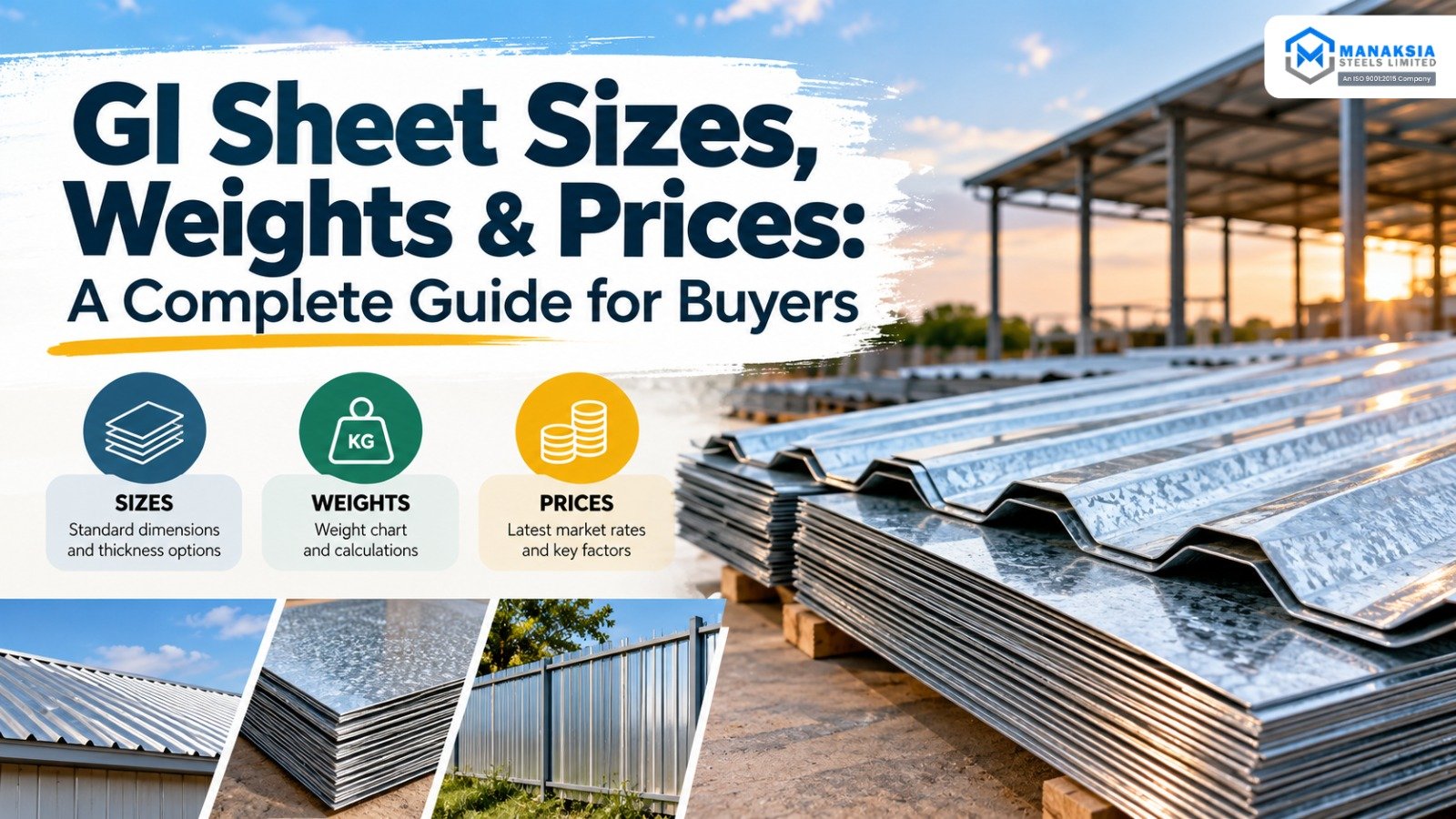
This guide explains how GI sheets are measured, how their weight can be estimated, what affects pricing, and what buyers should check before placing an order.
What Is a GI Sheet?
A galvanized iron (GI) sheet is generally a steel sheet coated with zinc to help protect the underlying steel from corrosion. Although commonly called an iron sheet, the base material is typically steel.
The zinc coating provides a protective barrier and helps improve resistance to corrosion. This makes GI sheets useful in construction and fabrication applications where moisture and changing environmental conditions may be a concern.
Common applications include:
- Roofing and wall cladding for residential, commercial, and industrial buildings.
- Warehouses, sheds, workshops, and agricultural structures.
- Ducting, ventilation systems, and equipment enclosures.
- Fabrication and general engineering applications.
- Infrastructure and construction projects.
The right product depends on the project’s technical requirements, exposure conditions, and intended use. A sheet suitable for one application may not be appropriate for another.
Understanding GI Sheet Sizes and Standard Dimensions
Before comparing prices, start with the dimensions. A sheet’s length, width, and thickness determine how much material it contains, how much it weighs, and how much coverage it provides.
When comparing GI sheet size and price, make sure the products have equivalent specifications. Otherwise, a lower quotation may simply reflect a smaller or thinner sheet.
Common GI Sheet Dimensions
Depending on the manufacturer and product specification, buyers may encounter the following nominal lengths:
| Sheet length | Approximate length in metres | Typical consideration |
| 6 feet | 1.83 m | Smaller structures and fabrication |
| 8 feet | 2.44 m | General construction requirements |
| 10 feet | 3.05 m | Larger roofing and cladding sections |
| 12 feet | 3.66 m | Extended coverage and industrial applications |
These are illustrative examples, not a guarantee of availability. Actual dimensions and widths vary by supplier and product type, so confirm the specifications before ordering.
For roofing and cladding, there is another detail worth checking: effective coverage. Adjacent sheets often overlap during installation, which means the usable covered width may be less than the sheet’s overall width.
That difference can affect the total quantity required for a project. Before finalising an order, confirm the sheet length, width, thickness, dimensional tolerances, and whether the product is a plain GI sheet or a profiled roofing sheet.
GI Sheet Thickness and Gauge Explained
Thickness influences a sheet’s weight, rigidity, and price. A thinner sheet may suit certain lightweight applications, while a thicker sheet may be needed where greater strength or stiffness is required.
But thicker does not automatically mean better. The correct specification depends on the application, structural support, environmental exposure, and applicable engineering requirements.
What Does Gauge Mean?
Gauge is a numbering system traditionally used to describe sheet-metal thickness. The relationship between gauge and thickness can be confusing because different gauge systems may use different measurements.
In commonly used sheet-metal gauge systems, a higher gauge number generally indicates a thinner sheet. The exact thickness associated with a gauge number, however, depends on the applicable standard and material specification.
For a more reliable comparison, ask suppliers to state the actual thickness in millimetres. Also clarify whether the quoted measurement refers to the base steel thickness or the total coated thickness.
This helps prevent a common purchasing mistake: comparing two sheets by their gauge labels alone when their actual specifications may differ.
How to Select the Right Thickness
Consider these factors before choosing a sheet:
- Application: Roofing, wall cladding, ducting, and fabrication may require different specifications.
- Structural support: The spacing and design of supporting members influence the required sheet thickness.
- Environmental exposure: Moisture, pollution, and other site conditions matter.
- Expected service life: Consider durability and maintenance requirements.
- Applicable standards: Follow the relevant engineering and building specifications.
The objective is to select a product that meets the project’s requirements without paying for specifications that are unnecessary for the application.
How to Calculate GI Sheet Weight
Weight matters because many steel quotations are based on a per-kilogram rate. Estimating the weight of a sheet helps buyers compare quotations, calculate material requirements, and plan transportation.
A commonly used formula for estimating the weight of the steel base is:
Approximate steel weight (kg) = Length (m) × Width (m) × Thickness (mm) × 7.85
Here, 7.85 is the approximate density factor used for steel when dimensions are entered in these units.
Example: Calculating Sheet Weight
Suppose a sheet has the following illustrative dimensions:
- Length: 8 feet, or approximately 2.44 metres
- Width: 4 feet, or approximately 1.22 metres
- Base steel thickness: 0.5 mm
Using the formula:
2.44 × 1.22 × 0.5 × 7.85 = approximately 11.7 kg
The estimated base steel weight is therefore around 11.7 kg.
This is a calculation example, not a specification for every 8-foot GI sheet. Actual weight can vary with dimensions, thickness tolerances, coating, and manufacturing specifications.
For bulk orders, confirm the supplier’s stated weight and the basis on which the material is sold.
What Determines GI Sheet Price Per Kg?
The GI sheet price per kg is influenced by more than the price of steel alone. Two products that appear similar may have different rates because their thickness, zinc coating, order quantities, and commercial terms are not identical.
1. Steel Market Conditions
Steel prices can change with raw-material costs, market demand, supply conditions, and other commercial factors. A quotation obtained earlier may not reflect the rate available when an order is placed.
2. Sheet Thickness and Weight
Thicker sheets generally contain more steel per unit area. This increases their weight and affects the total material cost.
When comparing quotations, make sure the sheets have equivalent thicknesses and dimensions.
3. Zinc Coating Specification
The zinc coating is an important part of a GI sheet‘s corrosion protection. Different coating specifications can influence the product’s cost and suitability for particular environments.
Ask the supplier to confirm the relevant coating specification instead of assuming that all galvanized sheets offer the same level of protection.
4. Order Quantity
The number of sheets required can affect commercial terms, handling, and transportation costs. For larger orders, request a quotation that clearly states the applicable quantity and pricing conditions.
5. Transportation and Other Charges
Freight, handling, packaging, taxes, and other applicable charges can change the final delivered cost.
A quotation with a lower material rate may not be the least expensive option once delivery and other charges are included.
The best way to establish the current GI sheet price per kg is to request a quotation based on the exact product specifications, order quantity, and delivery location.
What Determines the 12 Feet GI Sheet Price?
The 12 feet GI sheet price is an important consideration for buyers working on roofing projects, sheds, warehouses, and other structures requiring longer sheets.
However, length alone does not determine the cost. Two 12-foot sheets may have different prices because their widths, thicknesses, coating specifications, and weights differ.
Factors to Check Before Comparing Prices
Sheet thickness: A thicker sheet generally weighs more than a comparable thinner sheet of the same dimensions.
Sheet width: Wider sheets use more material, which affects their overall weight and cost.
Zinc coating: Differences in coating specifications may influence the product’s price and corrosion performance.
Quantity required: The number of sheets ordered may affect pricing and transportation arrangements.
Delivery location: Freight costs depend on the destination, consignment size, and transport arrangements.
Product type: Plain GI sheets and profiled roofing sheets may differ in dimensions, manufacturing processes, and pricing structures.
To estimate the 12 feet GI sheet price, confirm the required width, base steel thickness, coating specification, and approximate sheet weight. You can then use an assumed rate per kilogram for preliminary budgeting.
For example:
Estimated material cost = Approximate sheet weight × Assumed price per kg
This calculation provides a budgeting estimate only. It does not represent a current market quotation. Request an updated supplier quote to establish the actual purchase cost.
Also confirm whether the stated sheet length is the physical length or whether the supplier is referring to effective coverage after installation overlaps.
How to Choose the Right GI Sheet for Your Project
The lowest quotation is not always the best choice. A product that fails to meet the project’s requirements can lead to avoidable maintenance, replacement, or installation costs.
Before placing an order, work through these checks.
1. Define the Application
Identify whether the sheets will be used for roofing, cladding, fabrication, ducting, or another purpose. The application determines which material specifications need to be considered.
2. Confirm the Dimensions
Check the required length and width. For roofing, account for overlaps, roof slope, cutting requirements, and effective coverage when calculating quantities.
3. Compare Thickness and Coating
Ask for the actual base steel thickness and the applicable zinc coating specification. Compare products that meet the same requirements.
4. Review Quality Documentation
Where applicable, check product test certificates, inspection reports, dimensional tolerances, and conformity with relevant standards. These documents help establish whether the supplied material matches the agreed specifications.
5. Estimate Weight and Quantity
Calculate the approximate weight per sheet, then multiply it by the required number of sheets. Allow for cutting, overlaps, and project-specific wastage.
6. Compare the Complete Quotation
Look beyond the per-kilogram rate. Review delivery charges, applicable taxes, payment terms, lead times, minimum order quantities, and the supplier’s ability to meet your specifications.
A clear written quotation makes it easier to compare suppliers and avoid unexpected costs.
Common Mistakes to Avoid When Buying GI Sheets
Even experienced buyers can overlook small details when comparing multiple quotations. Watch out for these common mistakes:
- Comparing prices without checking thickness.
- Assuming all gauge systems use the same measurements.
- Ignoring differences in zinc coating specifications.
- Relying on outdated online prices for budgeting.
- Forgetting installation overlaps when estimating coverage.
- Overlooking transportation and handling charges.
- Placing an order without documenting the agreed specifications.
These checks become especially important for large construction and industrial projects, where small differences in specifications can affect the overall order cost.
Frequently Asked Questions About GI Sheet Sizes and Prices
What are the standard sizes of GI sheets?
GI sheets are available in different lengths, widths, and thicknesses depending on the manufacturer and product specification. Confirm the available dimensions with your supplier before placing an order.
How is GI sheet weight calculated?
Approximate steel weight can be calculated by multiplying the sheet length in metres by its width in metres, thickness in millimetres, and the factor 7.85. Actual supplied weight may vary because of coating and manufacturing tolerances.
What determines the GI sheet price per kg?
The GI sheet price per kg depends on steel market conditions, thickness, zinc coating specification, order quantity, supplier terms, and other applicable costs. A current quotation is the best way to establish the price for a specific requirement.
How can I estimate the 12 feet GI sheet price?
To estimate the 12 feet GI sheet price, confirm the sheet’s width, base steel thickness, coating specification, and approximate weight. Multiply the estimated weight by an assumed rate per kilogram for preliminary budgeting, then request a current quotation.
Is a thicker GI sheet always better?
Not necessarily. The right thickness depends on the intended application, structural requirements, environmental exposure, and applicable standards. Select a sheet that meets the project’s requirements.
What should I check before ordering GI sheets in bulk?
Confirm dimensions, thickness, coating specifications, quantity, quality documentation, delivery schedule, and commercial terms. Request a written quotation that clearly defines the agreed product specifications.
Make a More Informed GI Sheet Purchase
Understanding GI sheet size and price helps buyers compare products, estimate material quantities, and plan project budgets with greater confidence.
Before choosing a supplier, verify dimensions, check the actual thickness, calculate approximate weight, and compare the complete quotation. These simple steps can help you make a purchasing decision based on the product’s suitability and total cost, rather than one number on a price list.
At Manaksia Steels, buyers can explore the available steel product range and discuss their requirements to identify a suitable option for their applications.
Planning your next steel procurement? Contact Manaksia Steels to discuss your requirements and request a quotation based on your preferred dimensions, thickness, coating specification, and quantity.