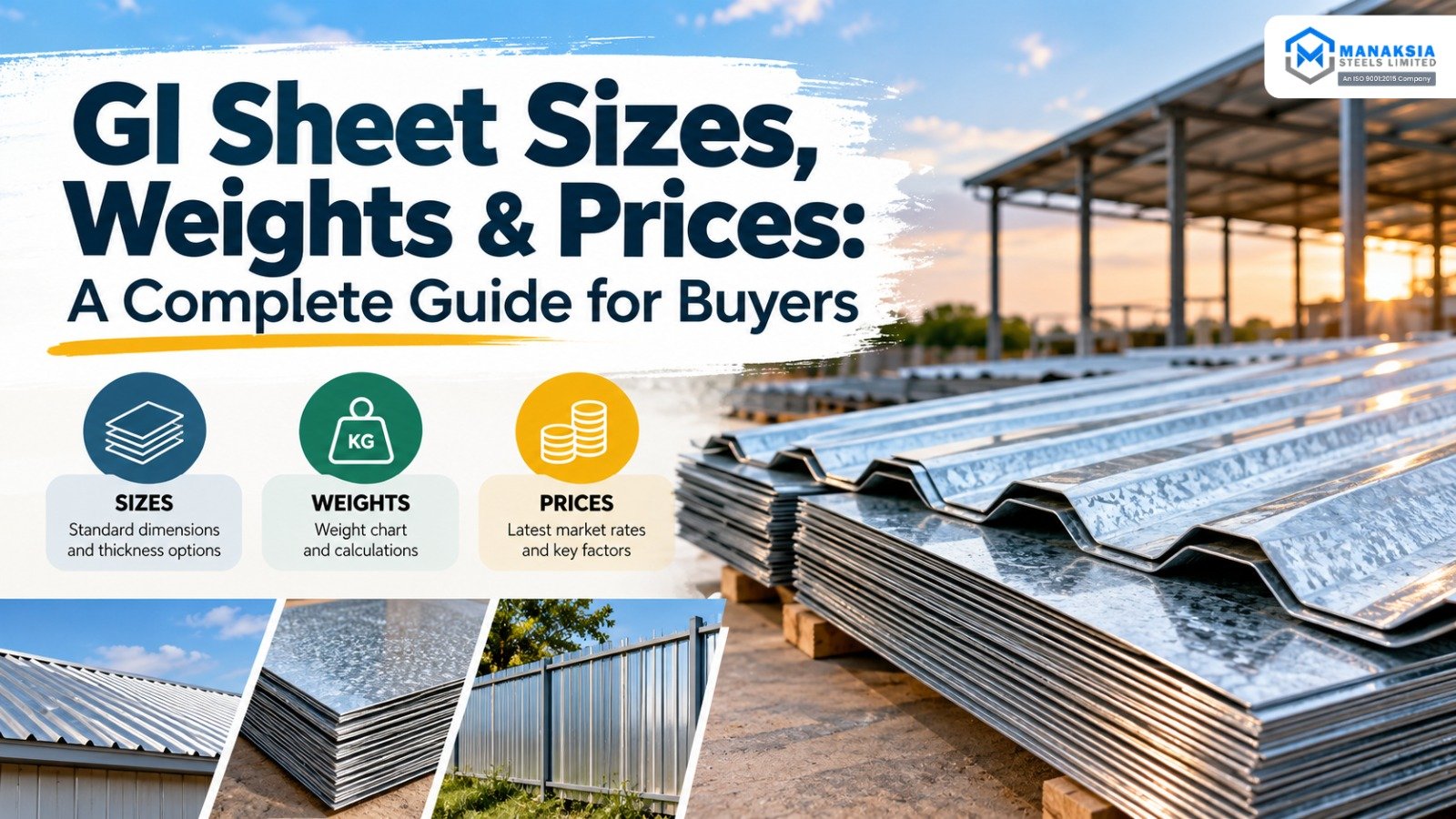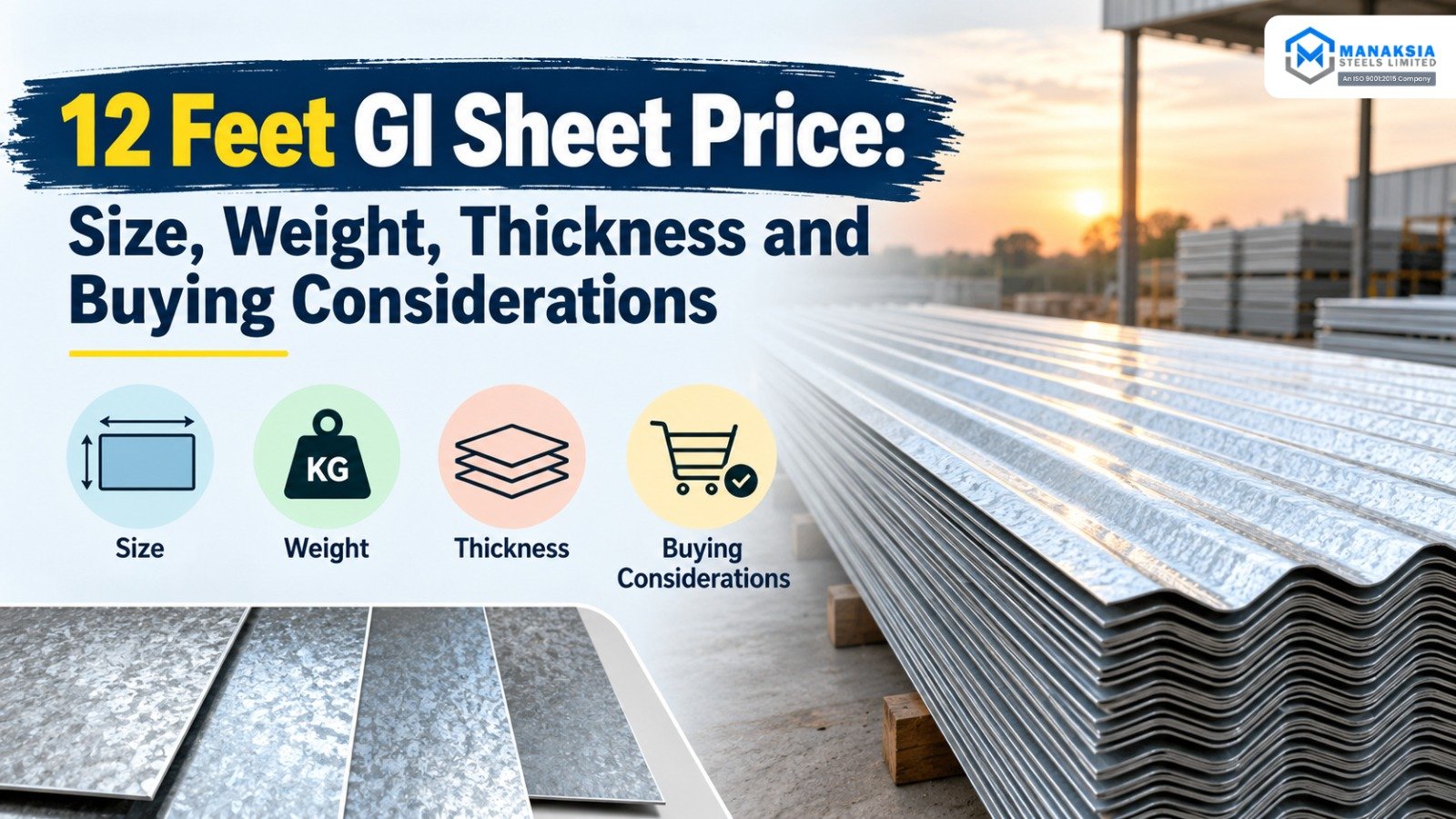
When planning a warehouse, industrial shed, workshop, or commercial building, roofing material is an important investment. Buyers often start with a simple question: what is the 12 feet GI sheet price, and how can they find the right sheet without compromising on quality?
The answer depends on more than length alone. Thickness, width, zinc coating, steel quality, sheet profile, and order quantity all influence the final cost. Understanding these factors helps buyers compare quotations accurately and choose roofing materials that meet their project requirements.
This guide explains 12 ft GI roofing sheet dimensions, weight calculations, thickness options, pricing factors, and essential checks before purchasing. Whether you are buying for a small shed or a large industrial project, these details can help you make a more informed decision.
What Is a 12 Feet GI Sheet?
A galvanised iron (GI) sheet is a steel sheet coated with zinc to help protect the underlying steel against corrosion. GI sheets are commonly used for roofing, wall cladding, sheds, warehouses, and other construction applications.
A 12 feet GI sheet refers to a sheet approximately 12 feet long, equivalent to 3.66 metres. Its width and thickness may vary depending on the product and intended application.
GI sheets are generally available in two common forms:
- Galvanised Plain (GP) sheets: Flat sheets used in fabrication, panels, and other suitable applications.
- Galvanised Corrugated (GC) sheets: Profiled sheets commonly used for roofing and cladding.
Manaksia Steels Limited offers galvanised steel products in both plain and corrugated forms, with different thicknesses, dimensions, and zinc coating options depending on the specification.
12 Feet GI Sheet Price: What Should You Expect?
There is no single fixed price for every 12-foot GI sheet. Two sheets of the same length can have different prices because their widths, thicknesses, coating specifications, and material grades may differ.
For an accurate quotation, buyers should confirm the following details:
- Required sheet length and width.
- Thickness in millimetres.
- Zinc coating specification.
- Plain or corrugated profile.
- Order quantity and delivery location.
GI sheets may be quoted per kilogram, per sheet, or per unit area. When comparing suppliers, make sure the pricing basis and specifications are consistent.
Steel and zinc input costs, transportation charges, taxes, and order volume can also affect the final quotation. Therefore, requesting a current price directly from the manufacturer or supplier is the most reliable way to estimate your purchase cost.
12 Ft GI Roofing Sheet: Size and Thickness Comparison
The right GI sheet dimensions depend on your roof design, support spacing, and coverage requirements.
A 12-foot sheet may be supplied in different widths. The following examples illustrate how width and thickness affect the material weight.
| Sheet dimensions | Thickness | Approx. theoretical steel weight |
| 12 ft × 3 ft | 0.40 mm | 10.5 kg |
| 12 ft × 3.5 ft | 0.40 mm | 12.3 kg |
| 12 ft × 4 ft | 0.40 mm | 14.0 kg |
| 12 ft × 3 ft | 0.50 mm | 13.1 kg |
| 12 ft × 3.5 ft | 0.50 mm | 15.3 kg |
| 12 ft × 4 ft | 0.50 mm | 17.5 kg |
| 12 ft × 3 ft | 0.60 mm | 15.7 kg |
| 12 ft × 3.5 ft | 0.60 mm | 18.4 kg |
| 12 ft × 4 ft | 0.60 mm | 21.0 kg |
Note: These are approximate theoretical weights calculated using steel density, excluding the additional mass of the zinc coating. Actual weights can vary with coating mass, thickness tolerances, and corrugated profile geometry. Confirm the manufacturer’s specifications before ordering.
Manaksia Steels lists galvanised steel thickness options from 0.10 mm to 0.60 mm across different width ranges. Available dimensions depend on the selected thickness and product specification.
GI Sheet Weight Chart: How to Calculate the Weight of a 12-Foot Sheet
Understanding a GI sheet weight chart is useful when estimating material requirements, transportation costs, and the total purchase value.
For a basic theoretical calculation, use the following formula:
Weight (kg) = Length (m) × Width (m) × Thickness (mm) × 7.85
Here, 7.85 is the approximate density factor for steel when thickness is expressed in millimetres and dimensions are in metres.
Example: Weight of a 12 ft × 3.5 ft GI Sheet
Suppose you need a sheet with the following dimensions:
- Length: 12 feet = 3.6576 metres
- Width: 3.5 feet = 1.0668 metres
- Thickness: 0.50 mm
The estimated steel weight is:
3.6576 × 1.0668 × 0.50 × 7.85 = approximately 15.3 kg.
If you require 100 sheets of the same specification, the estimated base-steel weight would be approximately 1,530 kg, or 1.53 tonnes, before accounting for the zinc coating and manufacturing variations.
For corrugated sheets, use the manufacturer’s specified dimensions and weight whenever available. The developed width of the sheet and the effective roof coverage width can differ because of the profile and overlapping edges.
How Does Thickness Affect the 12 Feet GI Sheet Price?
Thickness is one of the key factors influencing the price of a GI roofing sheet.
0.40 mm GI Sheets
Thinner sheets may suit certain light-duty applications, depending on the profile, support spacing, and site conditions. Buyers should confirm that the selected specification meets the structural requirements of the intended installation.
0.50 mm GI Sheets
A 0.50 mm sheet can be considered for roofing projects where its material specification and profile meet the design requirements. Its suitability depends on wind loads, support spacing, and the installation method.
0.60 mm GI Sheets
A thicker sheet contains more steel per unit area and generally weighs more than a thinner sheet of the same dimensions. It may be appropriate for applications requiring a different level of stiffness, subject to engineering requirements.
Important: Thickness alone does not determine roofing performance. Zinc coating, steel grade, sheet profile, fixing arrangement, and structural design also matter. Always confirm the specified thickness in millimetres rather than relying only on gauge numbers.
Factors That Affect GI Sheet Pricing
Before requesting a quotation, understand the main factors that influence the 12 feet GI sheet price.
1. Thickness and weight: Thicker sheets generally use more steel, increasing material weight and cost.
2. Sheet width and dimensions: Wider sheets require more material. The number of sheets needed also depends on the effective coverage width after overlaps.
3. Zinc coating: The zinc coating specification affects corrosion protection and may influence the price. Manaksia Steels lists galvanised coating options of 80 GSM to 120 GSM, with other requirements available on request.
4. Sheet profile: Plain and corrugated sheets can differ in forming requirements and intended applications.
5. Order quantity: Bulk orders may have different commercial terms from small purchases.
6. Transportation and taxes: Freight, loading, unloading, applicable taxes, and delivery location can affect the total landed cost.
7. Market conditions: Steel and zinc input prices fluctuate, so quotations should be checked for validity before placing an order.
For an accurate comparison, request quotations for the same thickness, coating, dimensions, product type, and quantity.
What to Check Before Buying a 12 Ft GI Roofing Sheet
A competitive price is important, but buyers should also verify the technical details of the product.
- Confirm dimensions: Check the exact length, width, and effective coverage area.
- Verify thickness: Confirm the specified thickness and measurement basis.
- Check zinc coating: Request details of the coating mass and relevant product standards.
- Inspect the surface: Look for visible damage, scratches, or signs of unsuitable storage.
- Review the application: Ensure the sheet suits your roofing design and environmental conditions.
- Calculate total requirements: Include overlaps, ridges, fasteners, and expected cutting waste.
- Request documentation: Review applicable technical specifications and quality documentation.
- Confirm delivery terms: Check availability, transport costs, payment terms, and quotation validity.
These checks help reduce the risk of comparing products that appear similar but have different specifications.
Why Consider Manaksia Steels for GI Roofing Sheets?
Manaksia Steels Limited manufactures galvanised steel products for construction and industrial applications. Its product range includes Galvanised Plain (GP) and Galvanised Corrugated (GC) sheets, designed for applications such as roofing, ridges, and cladding.
The company offers different thicknesses, widths, lengths, and zinc coating options according to product requirements. This allows buyers to discuss their specific project needs and identify suitable product specifications.
To explore the available options, visit the Manaksia Steels GI sheet product page.
When requesting a quotation, share your required length, width, thickness, coating specification, order quantity, and delivery location. This helps the sales team provide a more relevant estimate.
Conclusion
Finding the right 12 feet GI sheet price requires more than comparing the cost of individual sheets. Dimensions, thickness, zinc coating, sheet profile, and total order quantity all influence the final purchase decision.
By using a GI sheet weight chart, understanding basic weight calculations, and checking technical specifications, buyers can estimate material requirements and compare supplier quotations more confidently.
Whether you are planning a warehouse, industrial shed, workshop, or commercial roofing project, choose GI sheets according to your structural requirements and expected environmental exposure.
Looking for GI roofing sheets for your next project? Contact Manaksia Steels Limited to discuss your required dimensions, thickness, coating specifications, and order quantity. Request a quotation to evaluate suitable galvanised steel solutions for your project.